General information only. This article explains dental topics in general terms and isn’t a substitute for personal advice. Everyone’s oral health and dental needs are different, so please see a dentist for advice that applies to you.
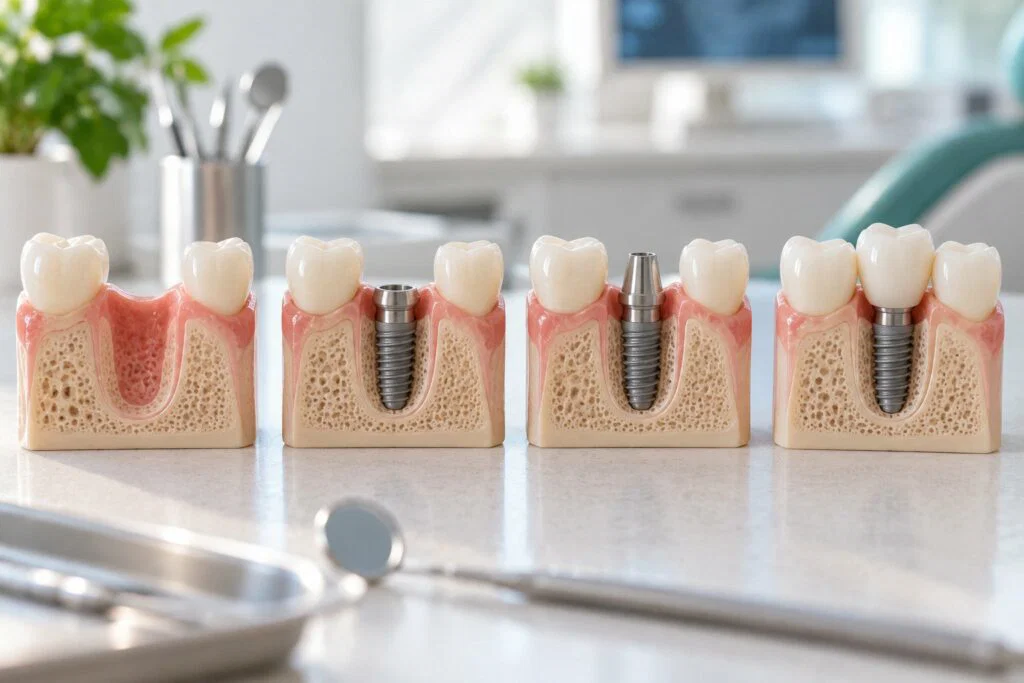
A dental implant is a small post, usually made of titanium, placed in the jawbone to replace the root of a missing tooth. Once healed, it can support a crown, a bridge or a denture. This article explains how implants work, who they suit, each stage of treatment, recovery, care, and the risks.
How implants work
An implant restoration has three parts:
- The implant: the post in the bone, which acts as a root.
- The abutment: a connector that attaches to the implant and supports the tooth.
- The crown, bridge or denture: the visible replacement tooth or teeth, made to match the surrounding teeth.
Over several months, bone grows closely against the implant surface. This process, called osseointegration, is what makes the implant stable enough to chew on.
Benefits and limits
- Implants are fixed and do not rely on neighbouring teeth, unlike a conventional bridge, which usually involves preparing the teeth either side.
- They can make dentures much more stable.
- An implant helps keep the bone around it, which otherwise tends to shrink after a tooth is lost.
- Chewing and speaking feel similar to natural teeth for most people.
Implants are not suitable for everyone. Treatment involves surgery and takes several months, costs more than many alternatives, and implants can still fail or develop gum and bone problems. Dentures and bridges remain reasonable options for many people.
Types of implants
- Endosteal implants are placed in the jawbone and are by far the most common type.
- Mini implants are narrower and are mainly used to help hold a lower denture in place where bone is limited.
- Zygomatic implants are long implants anchored in the cheekbone, used in some cases of severe bone loss in the upper jaw.
- Subperiosteal implants sit on top of the bone under the gum. They are rarely used now that bone grafting allows more people to have standard implants.
Who is suitable
Implants generally suit adults whose jaw growth is complete, with:
- enough healthy bone, or bone that can be built up with grafting;
- healthy gums, with any gum disease treated first;
- good general health, or medical conditions that are well controlled;
- the ability to clean well and attend regular check-ups.
Smoking, poorly controlled diabetes, some medications that affect bone (such as certain osteoporosis treatments) or blood clotting, past radiotherapy to the jaw, and heavy tooth grinding can increase the risk of problems. These do not always rule implants out but need to be discussed. Stopping smoking improves healing.
Step 1: Assessment and planning
The teeth, gums and bite are examined and medical history and medications are reviewed. X-rays, and often a 3D CBCT scan, show the amount of bone and the position of nerves and sinuses. The plan sets out the number and position of implants, what they will support, the timeline and any preparatory treatment.
Step 2: Preparatory treatment, if needed
If there is not enough bone, a bone graft may be placed first or at the same time as the implant. In the upper back jaw, a sinus lift may be used to add bone below the sinus. A damaged tooth may need to be removed and the site left to heal.
Step 3: Placing the implant
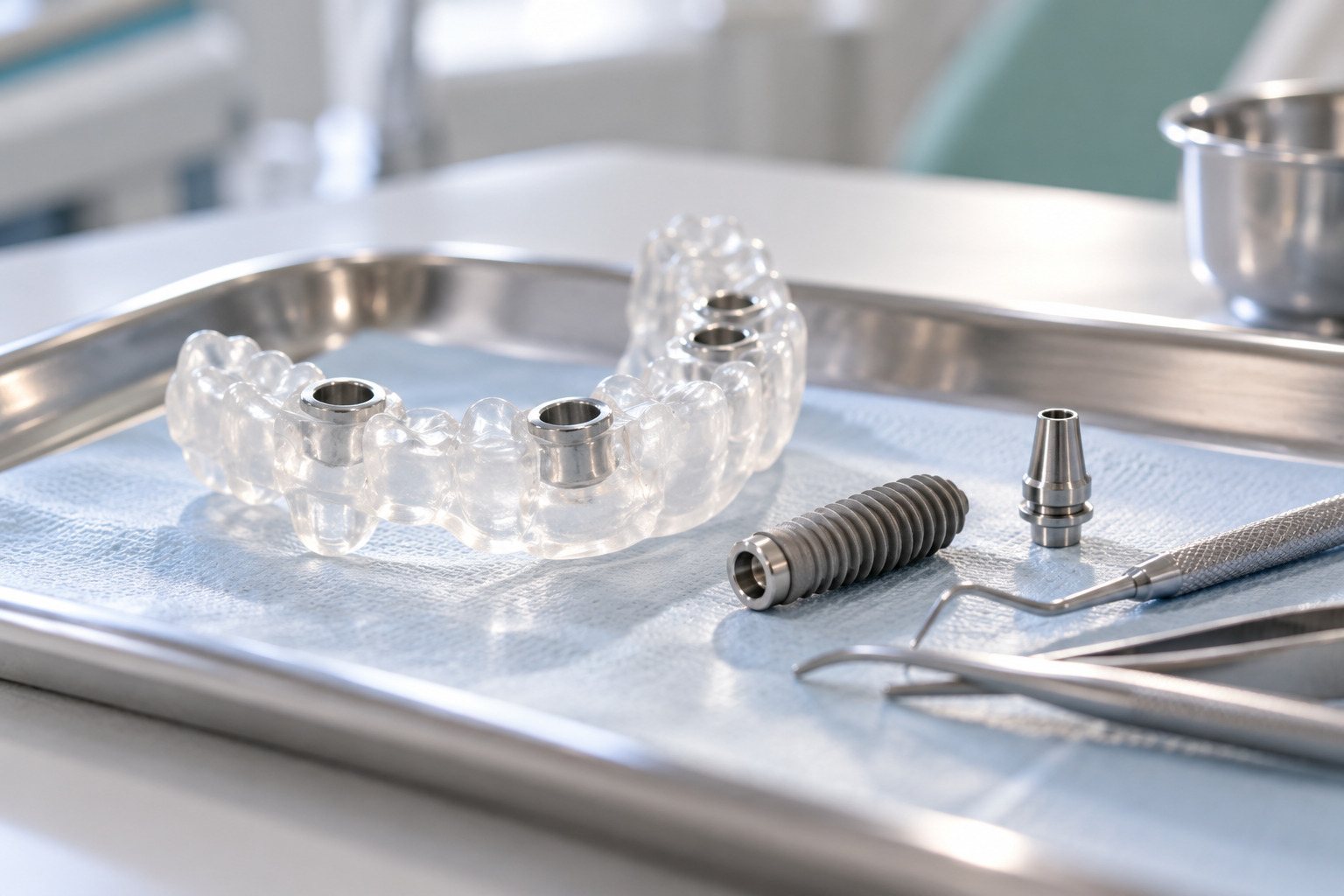
Implant placement is usually done under local anaesthetic, sometimes with sedation. The gum is opened, a precise hole is prepared in the bone, and the implant is placed. The gum is then closed with stitches, or a healing cap is left showing through the gum. A single implant often takes about an hour. In some cases a temporary tooth can be attached on the same day.
Step 4: Healing
Osseointegration usually takes around three to six months, sometimes longer if grafting was needed. A temporary denture or other replacement may be worn during this time.
| After surgery | What to expect |
|---|---|
| Swelling | Common for two to three days; use a cold pack on the first day |
| Bleeding | Some oozing for the first few hours |
| Discomfort | Usually managed with pain relief as advised |
| Food | Soft foods for the first few days; avoid chewing on the implant |
| Cleaning | Brush gently around the area; rinses as advised |
| Activity | Rest and avoid strenuous exercise for a day or two |
Contact the dentist if pain or swelling gets worse after a few days, or there is pus, fever or a loose healing cap.
Step 5: Abutment and crown
Once the implant has integrated, the abutment is attached. If the implant was covered by gum, a small procedure is needed to uncover it first. Impressions or scans are taken and the crown, bridge or denture is made to match the surrounding teeth. It is then screwed or cemented in place and the bite is checked.
Caring for implants
- Brush twice a day with a soft brush, paying attention to where the crown meets the gum.
- Clean between teeth daily with floss, interdental brushes or a water flosser, as advised.
- Avoid smoking, and wear a night guard if you grind your teeth.
- Keep up regular check-ups and professional cleans.
Implants cannot decay, but the gum and bone around them can become inflamed. Peri-implant mucositis (gum inflammation) can usually be reversed with better cleaning. Peri-implantitis involves bone loss around the implant and can lead to failure if not treated.
Risks and complications
- Infection at the surgical site.
- Failure to integrate, or loosening later, which is more likely with smoking, poor bone, uncontrolled diabetes or heavy biting forces.
- Nerve injury in the lower jaw, causing numbness or tingling of the lip, chin or tongue; usually temporary, occasionally permanent.
- Sinus problems with upper back implants.
- Mechanical problems such as a loose screw or chipped crown.
- Peri-implantitis in the longer term.
Careful assessment and planning reduce these risks, and they should be explained before treatment.
How long implants last
Long-term studies report that most implants are still in place after ten years, and many last much longer with good care. The crown or denture attached to an implant may wear and need replacing over time.
Common questions
Does implant surgery hurt?
Local anaesthetic numbs the area during surgery. Discomfort afterwards is often described as similar to having a tooth removed and usually settles within a few days.
How long does treatment take?
Usually from about three to nine months from placement to the final tooth, longer if bone grafting is needed first.