General information only. This article explains dental topics in general terms and isn’t a substitute for personal advice. Everyone’s oral health and dental needs are different, so please see a dentist for advice that applies to you.
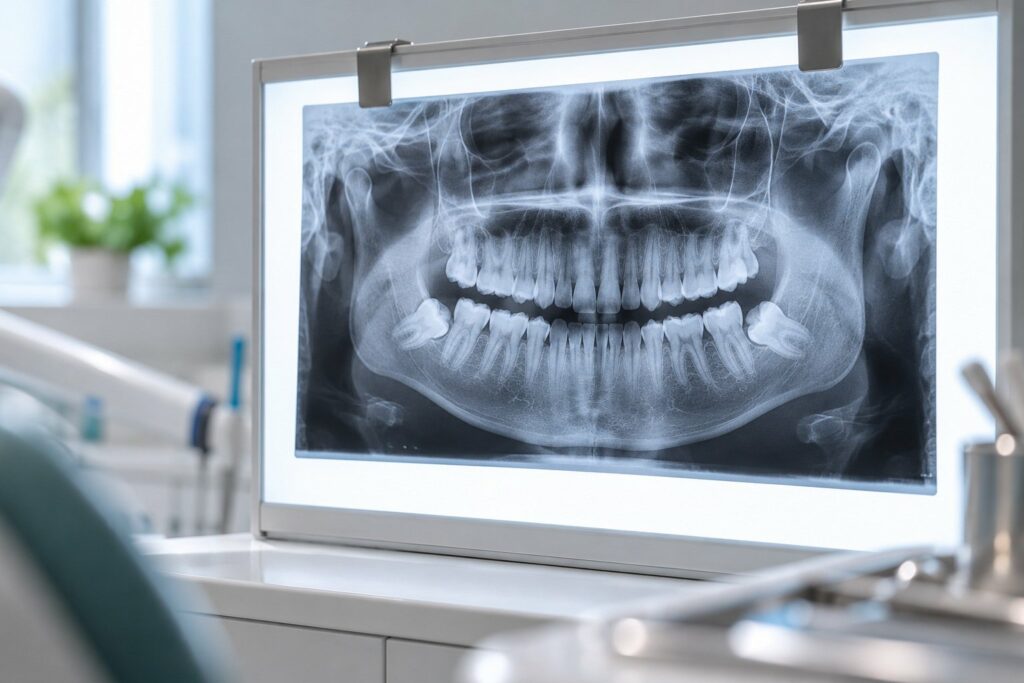
Wisdom teeth, or third molars, are the last teeth to come through, usually between the ages of about 17 and 25. Many people have four, one in each corner at the back of the mouth, but some have fewer or none. This article covers why wisdom teeth cause problems, when removal is advised, what happens before, during and after the procedure, and the possible complications.
Why wisdom teeth cause problems
Our ancestors had larger jaws and a coarser diet that needed more chewing. Modern jaws are often too small for these extra molars, so they may come through at an angle, only partly, or not at all. A tooth that cannot fully come through is called impacted.
Impacted or partly erupted wisdom teeth can trap food and bacteria, leading to:
- Pericoronitis: infection and swelling of the gum over a partly erupted tooth.
- Decay in the wisdom tooth or the back of the tooth in front.
- Gum disease around the back teeth.
- Damage to the neighbouring tooth from pressure.
- Cysts around an impacted tooth, which are uncommon but can damage bone.
Wisdom teeth are often blamed for crowding of the front teeth, but the evidence for this is weak, and crowding on its own is not usually a reason to remove them.
Signs a wisdom tooth may need attention
- Pain or tenderness at the back of the mouth, which may be worse when chewing.
- Red, swollen or bleeding gums around the tooth.
- Bad breath or an unpleasant taste, or pus from the area.
- Difficulty opening the mouth fully, or jaw pain.
- Swelling of the face or jaw, or fever, which needs prompt attention.
Problems are often found on routine X-rays before there are any symptoms.
Does every wisdom tooth need to come out?
No. Wisdom teeth that are fully through, in a good position, healthy and easy to clean can often be left and checked at regular visits. Removal is usually advised when a wisdom tooth is causing repeated infections, decay, gum disease, damage to the next tooth or a cyst, or when it is very likely to cause problems. The decision depends on the position of the tooth, the person’s age and health, and the risks of surgery, so it is worth discussing the options, including monitoring.
Before the procedure
The dentist or oral surgeon examines the mouth and takes X-rays, usually a panoramic X-ray, to see the position of the teeth and roots. If a lower root appears close to the nerve, a 3D CBCT scan may be suggested.
- Tell the dentist about your medical history, medications (especially blood thinners), allergies and any previous reactions to anaesthetic.
- Discuss which type of anaesthetic suits the case.
- If you will have sedation or general anaesthetic, follow the fasting instructions and arrange for someone to take you home and stay with you.
- Plan to rest for a day or two afterwards and have soft foods ready.
Anaesthetic options
| Option | What it involves |
|---|---|
| Local anaesthetic | Numbs the area; you stay awake. Common for straightforward removals. |
| Nitrous oxide (happy gas) | Breathed through a mask to help you relax; used with local anaesthetic. |
| IV sedation | Medicine through a vein for deep relaxation; you may remember little afterwards. |
| General anaesthetic | You are asleep; given in hospital or a day surgery, often for complex cases. |
During the procedure

A wisdom tooth that is fully through may be removed much like any other tooth. For an impacted tooth, a small cut is made in the gum, some bone may be removed, and the tooth may be divided into pieces so it can be taken out with less force. The socket is cleaned and stitches may be placed. Removing one tooth may take around 20 minutes; several impacted teeth take longer.
Recovery and aftercare
Most people feel better within a few days to a week, although the gum and bone take several weeks to heal fully. Swelling and stiffness usually peak around day two or three.
- Bleeding: bite firmly on gauze for 30–45 minutes. Some oozing for the first day is normal.
- Swelling: use a cold pack on the cheek for 15–20 minutes at a time on the first day.
- Pain: take pain relief as advised, such as paracetamol or ibuprofen if suitable for you.
- Rest: avoid strenuous activity for the first day or two.
- Food: eat soft foods such as yoghurt, soup and mashed potato, and avoid hard, crunchy or very hot food until healing allows.
- Protect the clot: for the first few days avoid smoking, straws and vigorous spitting or rinsing.
- Cleaning: brush gently, keeping away from the sockets at first. From the next day, gentle warm salt-water rinses after meals can help keep the area clean.
Possible complications
- Dry socket: the blood clot is lost or does not form, leaving bone exposed. It usually causes increasing, throbbing pain two to four days after removal, sometimes with a bad taste. A dentist can clean the socket and place a soothing dressing. Smoking raises the risk.
- Infection: signs include worsening swelling or pain after a few days, pus or fever.
- Nerve injury: lower wisdom teeth can lie close to the nerves supplying the lip, chin and tongue. Injury can cause numbness or tingling, which is usually temporary but can occasionally be permanent. The risk is assessed beforehand.
- Sinus involvement: upper wisdom teeth can be close to the sinus, and an opening occasionally forms, which usually heals but may need treatment.
- Bleeding that does not settle with pressure, and damage to a nearby tooth or filling, which are uncommon.
Contact a dentist promptly if pain gets worse rather than better after a few days, bleeding does not stop with pressure, or you have fever or spreading swelling. Seek urgent medical help if swelling affects breathing or swallowing.
Common questions
Should all four come out at once?
It depends on which teeth are causing or likely to cause problems. Removing several at once can mean one recovery period, but not every wisdom tooth needs to come out.
Will it hurt?
The anaesthetic stops pain during the procedure, though you may feel pressure. Soreness afterwards is normal and is usually managed with pain relief and rest.