General information only. This article explains dental topics in general terms and isn’t a substitute for personal advice. Everyone’s oral health and dental needs are different, so please see a dentist for advice that applies to you.
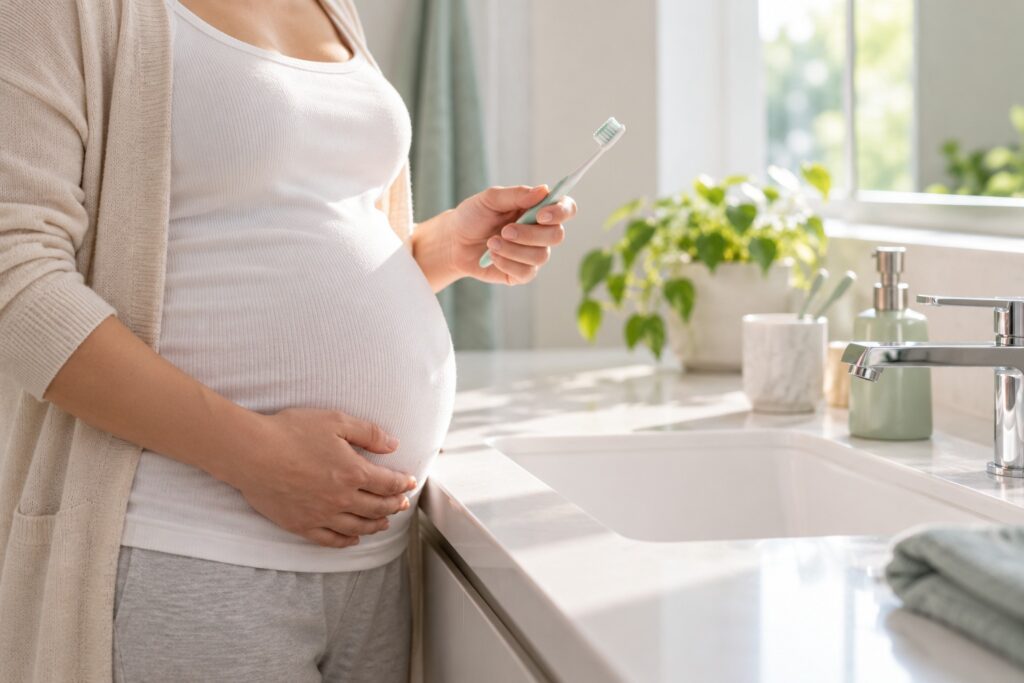
Pregnancy brings hormonal and lifestyle changes that can affect the mouth. Many people notice their gums bleed more easily, and morning sickness and cravings can affect the teeth. Looking after your oral health during pregnancy is good for you, and dental check-ups and most treatment are safe while pregnant.
How pregnancy affects the mouth
Pregnancy gingivitis
Hormonal changes make the gums react more strongly to plaque. Many pregnant people develop red, swollen gums that bleed when brushing or flossing, most often from the second month. This usually improves after the birth, but if gum disease is already present, pregnancy can make it worse.
Pregnancy epulis
Occasionally a red, soft lump grows on the gum between the teeth. This is called a pregnancy epulis or pyogenic granuloma. It is not cancerous and often shrinks after the birth, but it can bleed easily. If it interferes with eating or brushing, it can be removed.
Morning sickness and reflux
Vomiting and reflux bring stomach acid into the mouth, which can soften and wear away tooth enamel. After vomiting, rinse with water, a fluoride mouthwash or a teaspoon of bicarbonate of soda dissolved in a cup of water, and wait before brushing, because softened enamel brushes away more easily.
Cravings and snacking
Cravings often mean snacking more often. Frequent sugary or acidic foods and drinks increase the risk of decay and erosion.
Is dental treatment safe during pregnancy?
Yes. Check-ups, professional cleaning and most dental treatment are safe at any stage of pregnancy. The second trimester is often the most comfortable time for treatment. Urgent treatment for pain or infection should not be put off, because an untreated dental infection carries its own risks.
- Local anaesthetic is considered safe in pregnancy.
- X-rays are postponed until after the birth whenever possible. One is taken during pregnancy only when the risk of treating without it would outweigh the potential risk of the X-ray itself.
- Medicines. Some pain relievers and antibiotics are safe in pregnancy and others are not. Let the dentist know you are pregnant so any prescription is suitable.
- Elective treatments, such as teeth whitening and cosmetic work, are usually postponed until after the birth.
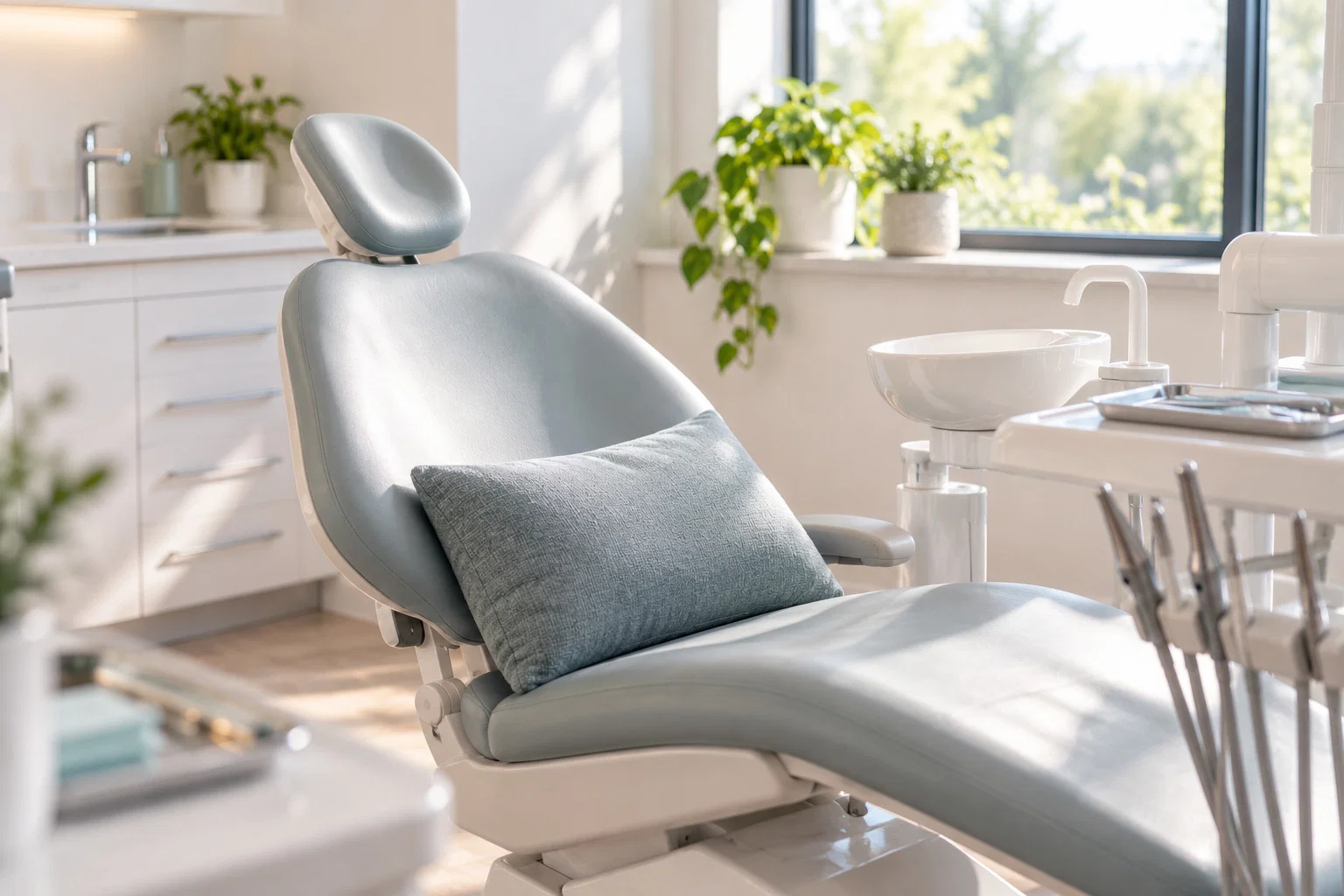
Lying flat on your back late in pregnancy can make you feel faint. Let the dental team know so they can adjust the chair, and you can bring a small cushion or ask for a break if needed.
Your baby’s teeth
A baby’s first teeth begin to form during pregnancy, well before they appear in the mouth, usually from around six months of age.
Common questions
Should I tell the dentist I am pregnant?
Yes. It affects the timing of X-rays, the choice of medicines and how the chair is positioned, so let the dental team know even in early pregnancy.
Is it true that you lose a tooth for every baby?
No. Pregnancy does not take calcium from the teeth. Problems during pregnancy come from changes in the gums, vomiting and diet, and can be prevented.
Why do my gums bleed more now that I am pregnant?
Pregnancy hormones make the gums more sensitive to plaque. Gentle, thorough brushing and cleaning between the teeth usually helps. If bleeding continues, a professional clean can help.
Can I have a filling while pregnant?
Yes. Fillings and other necessary treatment can be done during pregnancy, often most comfortably in the second trimester.
When to see a dentist
A check-up during pregnancy is a good idea, ideally early on. See a dentist sooner if you have toothache, swelling, a lump on the gum or gums that bleed a lot. More information: preventative dentistry and gum disease treatment.