General information only. This article explains dental topics in general terms and isn’t a substitute for personal advice. Everyone’s oral health and dental needs are different, so please see a dentist for advice that applies to you.

Tooth sensitivity is a short, sharp pain when a tooth meets something cold, hot, sweet or sour, or when cold air or a toothbrush touches it. The pain usually stops as soon as the trigger is removed. It is very common, and while it can be unpleasant, it often has a simple cause that can be managed.
Why teeth become sensitive
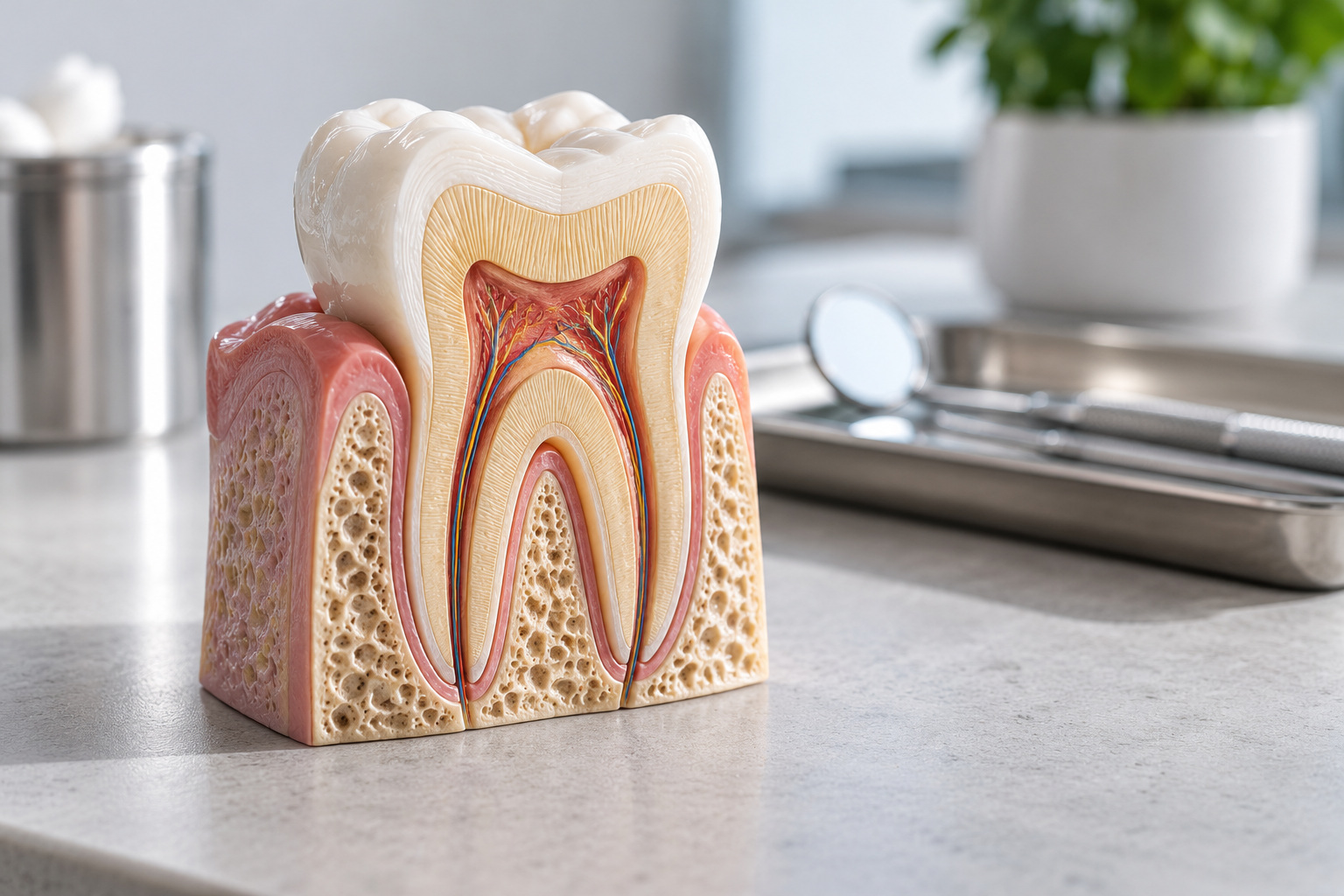
The crown of each tooth is covered by enamel, and the root is covered by a thin layer called cementum. Underneath is dentine, which contains thousands of microscopic tubules leading towards the nerve. When dentine is exposed, temperature and other triggers can travel along these tubules and stimulate the nerve, causing the sharp pain of sensitivity.
Dentine becomes exposed in several ways:
- Gum recession, where the gums pull back and expose the root surface, which has no enamel.
- Tooth wear from brushing too hard or with a hard-bristled brush (abrasion), or from acidic foods and drinks dissolving the enamel (erosion).
- Grinding or clenching, which can wear away enamel over time.
- Cracked teeth or worn, leaking fillings, which can let triggers reach the dentine.
- Decay, which can cause sensitivity before it causes constant pain.
Some sensitivity is also common for a short time after a filling, a professional clean, gum treatment or teeth whitening. This usually settles within days to a few weeks.
When it might be something else
Typical sensitivity is brief and goes away once the trigger is removed. Pain that lingers for more than a few seconds, throbs, wakes you at night, starts without a trigger, or hurts when you bite down may point to something else, such as an inflamed nerve, a cracked tooth or decay. These need to be checked by a dentist.
How sensitivity is treated
Treatment depends on the cause, which is why an examination is the first step. Common options include:
- Desensitising toothpaste. These contain ingredients such as potassium nitrate, stannous fluoride or arginine that calm the nerve or block the dentine tubules. They usually need to be used regularly for a few weeks before the full effect is felt.
- Fluoride varnish or desensitising agents applied by a dentist to the sensitive area.
- Bonding or a filling to cover an exposed root surface or replace a worn or leaking filling.
- Treating gum recession. In some cases, a gum graft can cover an exposed root. This is usually done by a periodontist.
- A splint (night guard) if grinding is wearing the teeth.
- Root canal treatment, occasionally, when sensitivity is severe and persistent and other treatment has not helped.
Sensitivity after whitening or dental treatment
Whitening gels pass through the enamel into the dentine, and many people notice temporary sensitivity during or soon after treatment. A new filling, a deep clean below the gum line or gum treatment can also leave teeth sensitive for a while, as the tooth and gums settle. This kind of sensitivity usually fades within days to a few weeks. If it does not settle, or gets worse, the tooth should be checked.
Common questions
Does desensitising toothpaste work straight away?
Some people notice a difference within days, but desensitising toothpastes usually take a few weeks of regular use to have their full effect.
Is sensitivity a sign of decay?
Sometimes. Decay can cause sensitivity to sweet foods or cold before it causes constant pain. Sensitivity that is limited to one tooth, or that lingers, is more likely to have a cause such as decay or a crack, and is worth having checked.
Why are my teeth more sensitive in winter?
Breathing in cold air, and cold drinks and foods, are common triggers. If the teeth are only sensitive in cold weather, the cause is often exposed dentine from gum recession or wear.
Can sensitivity go away by itself?
Sensitivity after treatment or whitening often settles by itself. Sensitivity caused by gum recession or wear usually needs the cause to be managed, and it often improves once the cause is addressed.
When to see a dentist
See a dentist if sensitivity lasts more than a few weeks, is getting worse, affects one tooth in particular, or comes with lingering pain, swelling or pain on biting. Sensitivity is often easy to manage once the cause is known.