General information only. This article explains dental topics in general terms and isn’t a substitute for personal advice. Everyone’s oral health and dental needs are different, so please see a dentist for advice that applies to you.
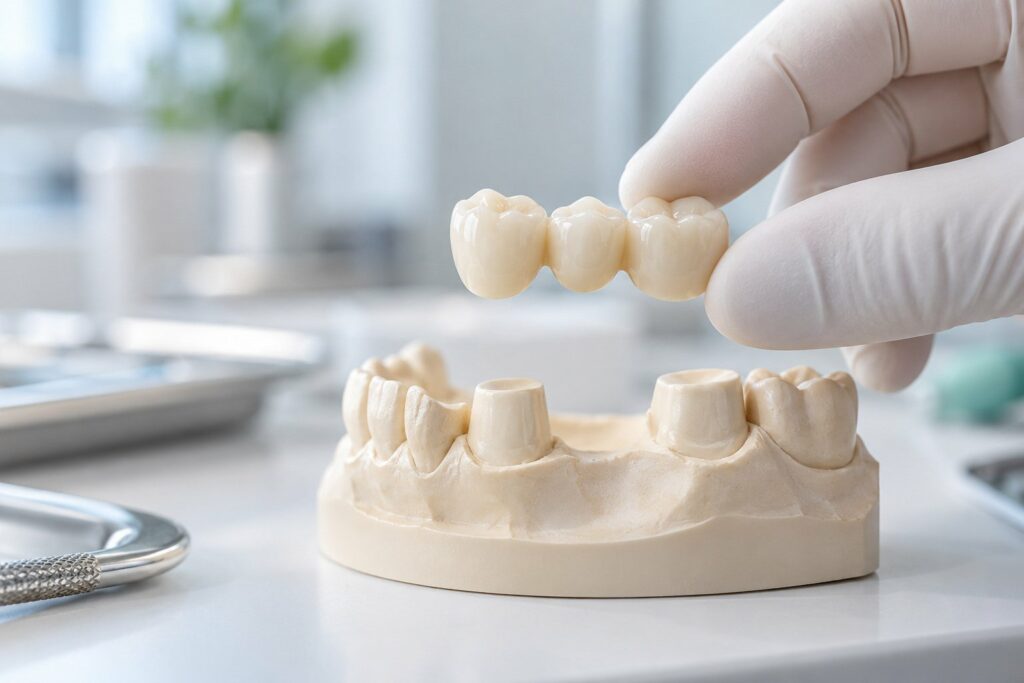
A dental bridge replaces one or more missing teeth by joining a false tooth (a pontic) to the teeth or implants on either side of the gap. Unlike a denture, it is fixed in place. This article explains the types of bridges, the procedure, aftercare, risks and the alternatives.
Types of bridges
- Conventional bridge: crowns on the teeth either side of the gap hold the false tooth. These teeth need to be shaped to fit the crowns.
- Cantilever bridge: the false tooth is supported from one side only. Used in selected situations, usually at the front.
- Resin-bonded (Maryland) bridge: the false tooth is attached to metal or ceramic wings bonded to the back of a neighbouring tooth. Little or no drilling is needed, but it is less strong and is mainly used for front teeth.
- Implant-supported bridge: held by dental implants instead of natural teeth, often used where several teeth are missing.
Benefits
- Restores chewing and can help with speech.
- Fills the gap, which can improve appearance.
- Helps stop neighbouring and opposing teeth drifting or over-erupting into the space.
- Fixed in place, so there is nothing to remove at night.
The procedure
- The teeth and gums are examined and X-rayed to check the supporting teeth are healthy.
- Under local anaesthetic, the supporting teeth are shaped (for a conventional bridge).
- A digital scan or impression is taken and the shade chosen.
- A temporary bridge is fitted while the bridge is made.
- At the next visit the bridge is checked for fit and bite, then cemented.
An implant-supported bridge takes longer, as the implants need to heal into the bone first.
Aftercare
- Brush twice a day with fluoride toothpaste.
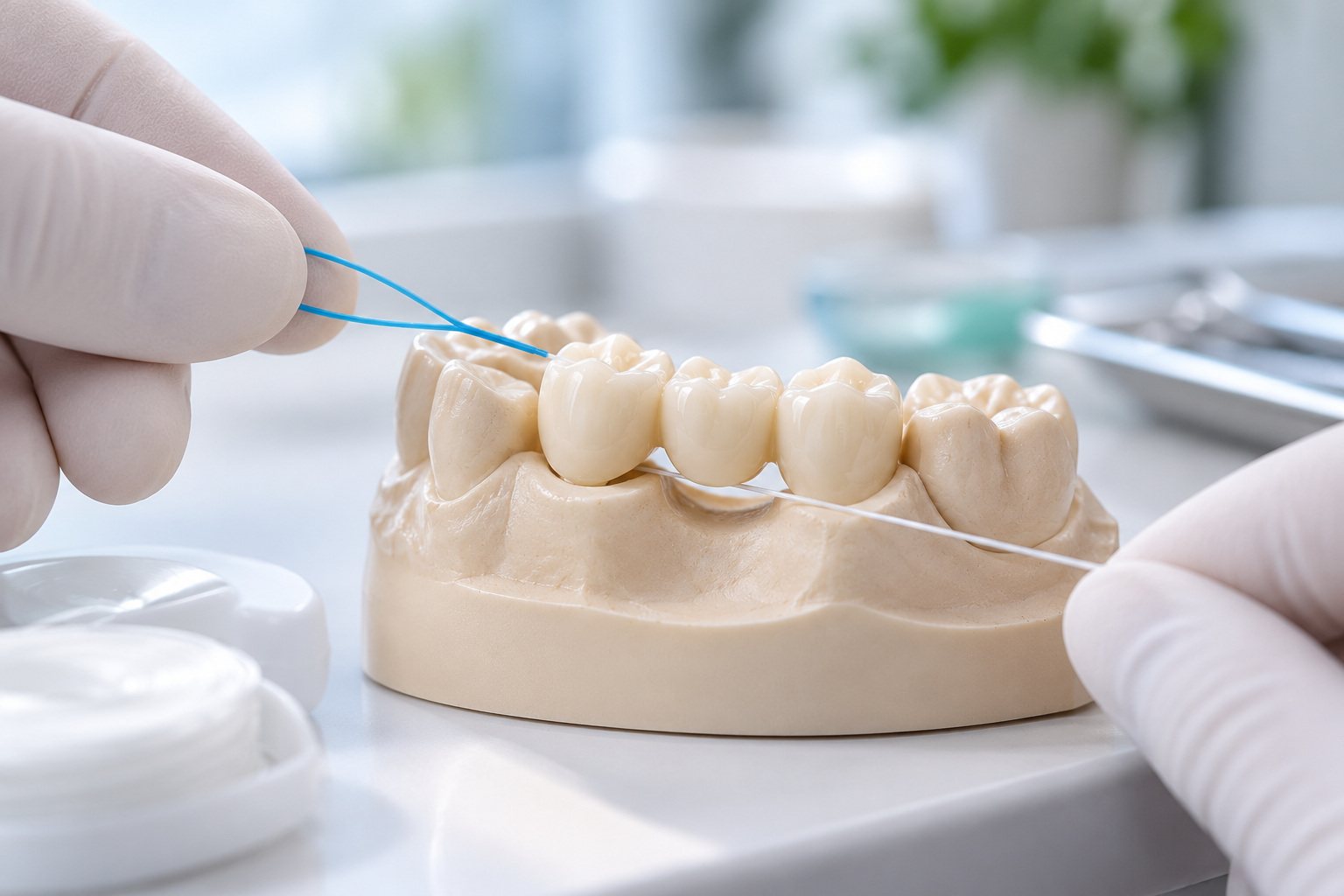
- Clean under the false tooth every day using a floss threader, superfloss or small interdental brushes.
- Avoid very hard or sticky foods that could chip or loosen the bridge.
- Have regular check-ups and professional cleans.
Risks and possible problems
- Decay or gum disease around the supporting teeth if they are not cleaned well; this is a common reason bridges fail.
- The supporting teeth may need root canal treatment if the nerve is irritated by preparation.
- The bridge may loosen, or the porcelain may chip.
- If a supporting tooth fails, the whole bridge may need replacing.
Alternatives
- Dental implants: a single implant with a crown avoids preparing the neighbouring teeth. See the dental implant procedure.
- Removable partial dentures: a lower-cost option that can replace several teeth. See types of dentures.
- Leaving the gap: sometimes reasonable, for example at the very back of the mouth, but the dentist can explain any risks.
Common questions
How long do bridges last?
Many bridges last 10 years or more with good cleaning and regular check-ups, but lifespan depends on the health of the supporting teeth.
Are bridges covered by health funds?
Bridges are usually classed as major dental. Cover varies, so check with your health fund using the item numbers on your treatment estimate.