
Dentures are removable replacement teeth set in a gum-coloured base. They are made to fit each person’s mouth and can replace a few missing teeth or a full arch. This article explains the types of dentures, what they can and cannot do, how they are made, how to care for them and common problems in the early weeks.
What dentures do
- Chewing: they make it easier to eat a wider range of foods, which helps with a balanced diet.
- Speech: missing front teeth can affect some sounds; dentures help the tongue and lips work as they should.
- Appearance: they fill gaps and support the lips and cheeks, which can sag when many teeth are lost.
- Protecting remaining teeth: partial dentures help stop natural teeth drifting or tilting into gaps.
Many people find replacing missing teeth helps them feel more comfortable smiling, speaking and eating with others. Conventional dentures do not stop the jawbone shrinking after teeth are lost, which is why their fit changes over time.
Types of dentures
Complete (full) dentures
Complete dentures replace all the teeth in the upper or lower jaw, or both. They rest on the gums and are held in place by suction, the muscles of the cheeks and tongue, and sometimes a denture adhesive. Upper dentures usually stay in more firmly than lower ones because they cover the palate.
Partial dentures
Partial dentures replace one or more teeth when some natural teeth remain. They have either an acrylic (plastic) base or a thin cobalt-chrome metal framework, which is stronger and less bulky. They are held by clasps or precision attachments on the remaining teeth.
Flexible dentures
Flexible partial dentures use a bendable nylon-type material with gum-coloured clasps, so there is no visible metal. They can be more comfortable for some people and suit those sensitive to metal. They are harder to adjust, reline or add teeth to than acrylic or metal dentures.
Immediate dentures
Immediate dentures are made before teeth are removed and fitted on the same day, so the person is not without teeth while the gums heal. As the gums and bone shrink over the following months, the denture loosens and needs relining or replacing.
Overdentures
Overdentures fit over a few remaining tooth roots or dental implants. Keeping roots can help preserve the bone around them and gives the denture more support.
Implant-retained and implant-supported dentures
Dentures can be attached to dental implants placed in the jawbone. Removable “snap-in” dentures clip onto implants and can be taken out for cleaning. Fixed implant bridges (sometimes called fixed dentures) are screwed onto implants and can only be removed by a dentist. Both are more stable than conventional dentures, but they need surgery, enough bone, a healing period of several months and ongoing maintenance, and cost more.
| Type | Removable? | Main advantages | Main considerations |
|---|---|---|---|
| Complete | Yes | Replaces a full arch | Lower dentures can be loose; fit changes over time |
| Partial (acrylic or metal) | Yes | Fills gaps; supports remaining teeth | Clasps may show; teeth under clasps need good cleaning |
| Flexible partial | Yes | No visible metal; comfortable | Harder to adjust or add to |
| Immediate | Yes | No time without teeth | Needs relining or replacing as gums heal |
| Overdenture | Yes | More support; helps keep bone around roots or implants | Roots or implants need care |
| Implant-retained or fixed | Snap-in yes; fixed no | Much more stable | Surgery, healing time, higher cost |
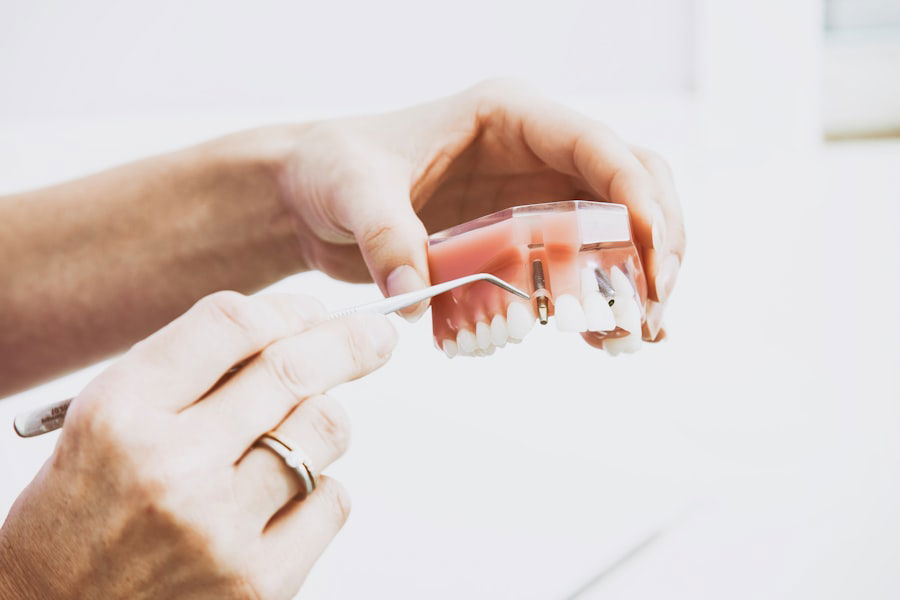
How dentures are made
- Assessment. The mouth, remaining teeth, gums and bone are checked, with X-rays if needed. Any decay or gum disease is treated first.
- Impressions. Moulds or scans are taken of the gums and teeth.
- Bite records. These record how the jaws meet and help choose tooth size, shape and shade.
- Try-in. A wax version is tried so fit, bite and appearance can be checked and changed.
- Fitting. The finished denture is fitted and adjusted.
- Review. Follow-up visits are usually needed to ease sore spots.
Dentures are made by dentists, and in Australia also by registered dental prosthetists, working with a dental laboratory. Treatment usually takes several appointments.
Getting used to dentures
New dentures often feel bulky at first. Extra saliva, mild soreness, and some difficulty speaking or eating are common in the first few weeks.
- Start with soft foods cut into small pieces, and chew using both sides at once.
- Practise speaking by reading aloud.
- Have sore spots adjusted rather than putting up with them.
- A small amount of denture adhesive can help, but should not be needed to make a poorly fitting denture usable.
Caring for dentures
- Remove and rinse dentures after meals.
- Brush them daily with a soft brush and a denture cleaner or mild soap; regular toothpaste can scratch them.
- Take them out at night, unless advised otherwise, and keep them in water or a soaking solution so they do not dry out. Do not use hot water, which can warp them.
- Clean your gums, tongue and any natural teeth twice a day.
- Handle them over a towel or basin of water in case they are dropped.
- Do not adjust or repair dentures yourself.
How long dentures last
Dentures often last around five to ten years, depending on care, wear and changes in the mouth. As the bone and gums change, a denture may need relining (adding new material to the fitting surface), rebasing or replacing. Regular check-ups let the fit, the gums and any remaining teeth be checked, and help pick up mouth problems early.
Common problems
- Sore spots or ulcers: usually fixed by adjustment; any ulcer that has not healed within two weeks should be checked.
- Looseness: often due to bone and gum changes; relining or implants may help.
- Cracks at the corners of the mouth or redness under the denture: can be linked to fit, a fungal infection or wearing dentures overnight.
- Clicking or difficulty chewing: may mean the bite or fit needs review.
Choosing a provider
Check that the dentist or dental prosthetist is registered on the AHPRA public register, and that the options, the number of visits, aftercare and the likely need for adjustments have been explained.
Related reading
This article is general information only and is not a substitute for advice from a dentist who has examined you.