General information only. This article explains dental topics in general terms and isn’t a substitute for personal advice. Everyone’s oral health and dental needs are different, so please see a dentist for advice that applies to you.
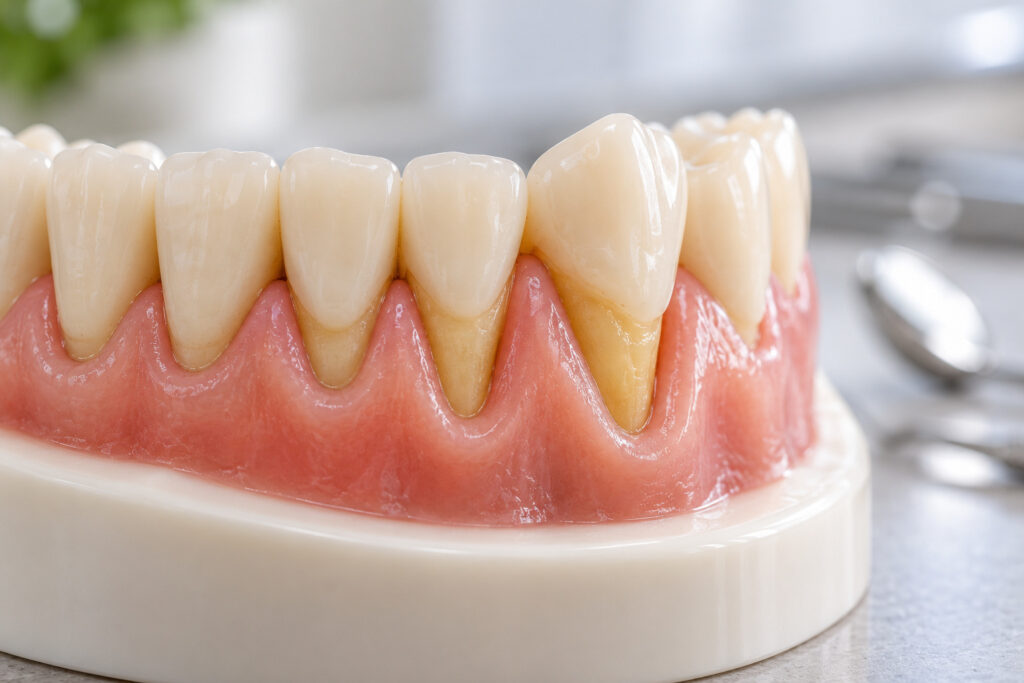
Gum recession is when the gum pulls back from a tooth and exposes part of the root. It usually happens slowly, so it is often not noticed until a tooth becomes sensitive or looks longer than before. Recession is common in adults and becomes more common with age.
Why gums recede
Recession usually has more than one contributing factor. Common ones include:
- Gum disease, which destroys the gum and bone that support the teeth.
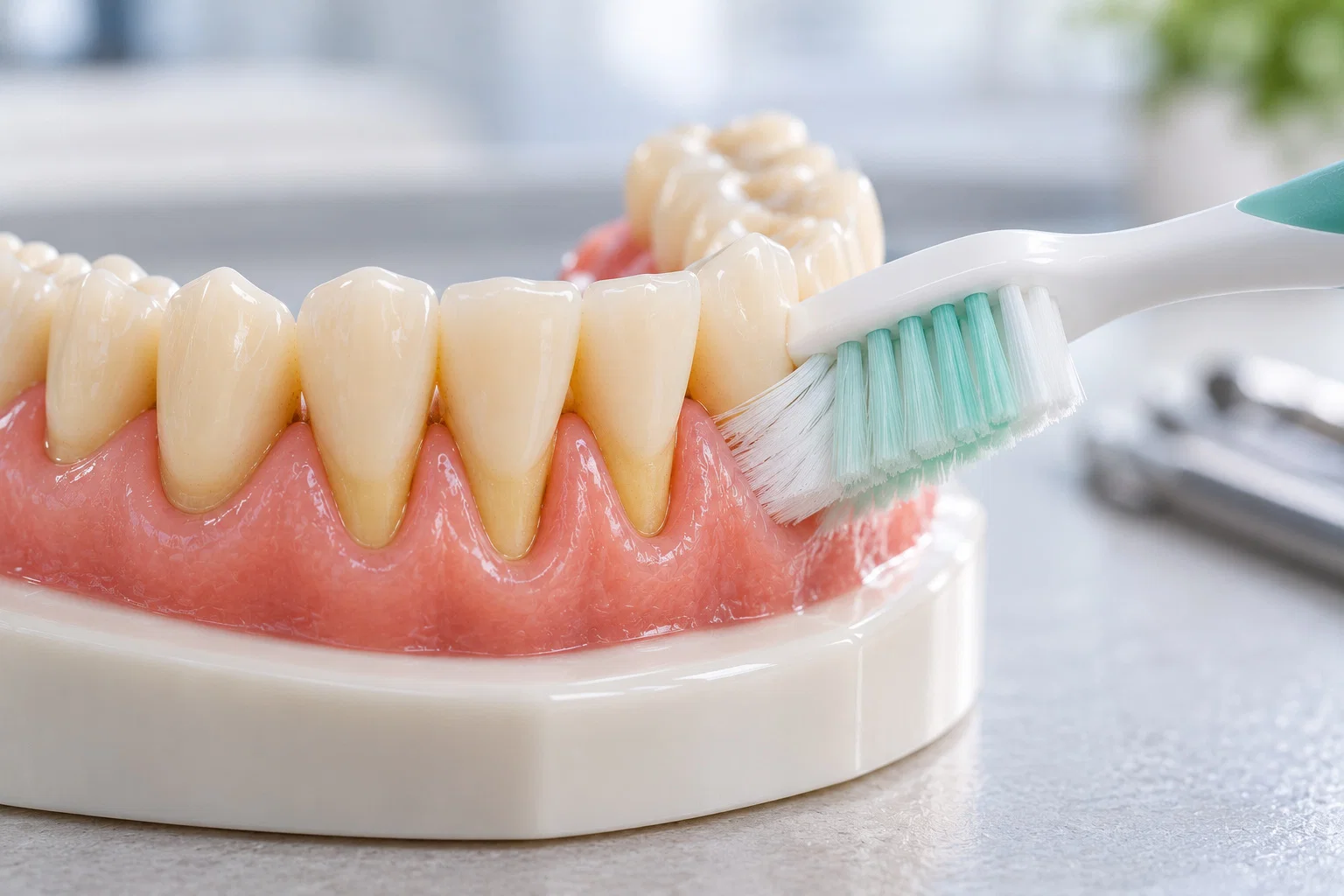
- Brushing too hard or with a hard-bristled toothbrush, which can wear the gum away over time.
- Thin gum tissue, which some people naturally have and which is more prone to recession.
- The position of a tooth. A tooth that sits towards the outside of the jaw may have only a thin layer of bone and gum over its root.
- Orthodontic tooth movement, in some cases, particularly where the gum is already thin.
- Lip or tongue piercings, which can rub against the gum.
- Smoking and tobacco use.
Signs of gum recession
- Teeth that look longer than before.
- A visible notch or step near the gum line, where the root begins.
- Sensitivity to cold, hot or sweet foods, or when brushing.
- A yellower area at the base of the tooth, where the root is exposed.
- Gaps between the teeth that look larger or darker.
How it can affect the teeth
The root of a tooth is not covered by enamel, so an exposed root is more prone to sensitivity, decay and wear. Where recession is caused by gum disease, the loss of supporting bone can eventually lead to loose teeth. In many people, though, mild recession stays stable for years.
How gum recession is managed
Management depends on the cause and how much the recession is affecting the tooth. The first step is identifying the cause, such as gum disease or brushing habits. The recession may then be measured and monitored over time to see whether it is progressing.
Sensitive or worn root surfaces can be covered with tooth-coloured bonding. Where recession is significant or progressing, a gum graft can sometimes cover the exposed root or thicken the gum. Gum grafting is usually performed by a periodontist, a specialist in gums and the supporting bone.
Common questions
Can receded gums grow back?
No. Gum tissue that has receded does not grow back by itself. Treatment aims to stop further recession and, where needed, protect or cover the root.
Is gum recession the same as gum disease?
Not always. Gum disease is a common cause of recession, but recession can also occur in people with healthy gums, for example from brushing too hard or thin gum tissue.
Does gum recession always need treatment?
No. Mild recession that is stable and not causing problems is often monitored. Treatment is considered when the recession is progressing, causing sensitivity or decay, or affecting appearance.
Why are my teeth suddenly sensitive near the gum?
Sensitivity near the gum line is often a sign of an exposed root surface, either from recession or from wear at the neck of the tooth. More information: sensitive teeth.
When to see a dentist
See a dentist if your teeth look longer, feel sensitive near the gum line, or your gums bleed or feel tender. Recession is easier to manage when it is picked up early. More information: gum disease treatment.