General information only. This article explains dental topics in general terms and isn’t a substitute for personal advice. Everyone’s oral health and dental needs are different, so please see a dentist for advice that applies to you.
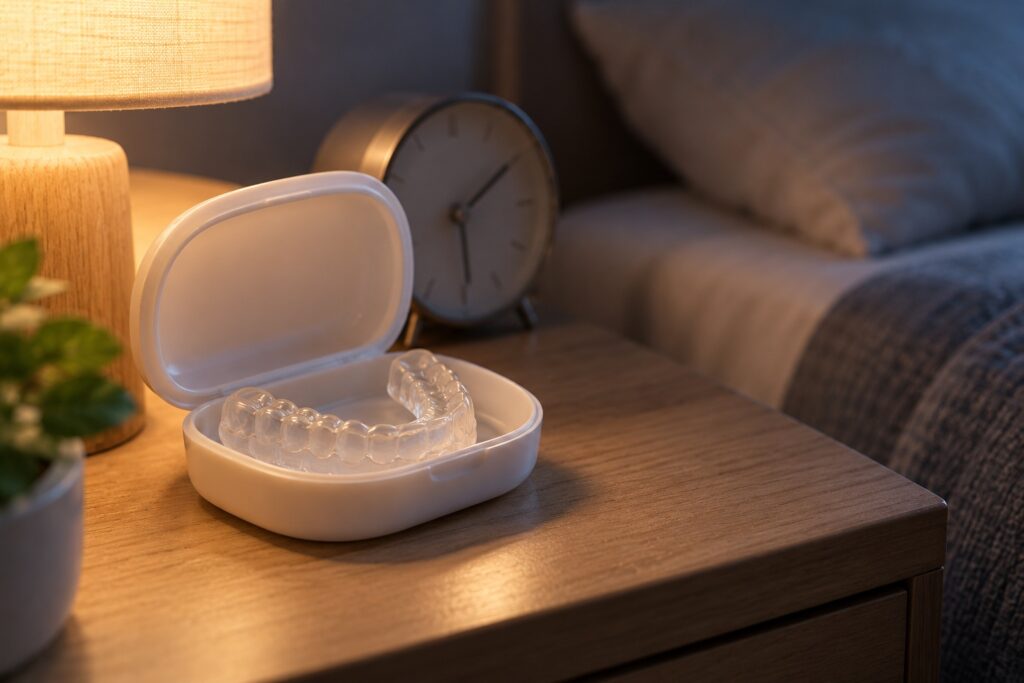
Bruxism is the habit of grinding, clenching or gnashing the teeth. Many people do it at some point, often without realising. It can happen during sleep or while awake, and while occasional grinding may cause no harm, frequent or forceful grinding can wear the teeth and strain the jaw muscles.
Sleep and awake bruxism
Sleep bruxism happens during sleep. Because the person is asleep, they are often unaware of it, and it may first be noticed by a partner who hears the grinding, or by a dentist who sees the wear.
Awake bruxism is usually clenching rather than grinding, often during concentration, stress or physical effort. People may notice their jaw is tight or their teeth are pressed together during the day.
Why it happens
The exact cause is often unclear, and several factors may play a part. Bruxism has been associated with:
- Stress and anxiety.
- Sleep disorders, including snoring and obstructive sleep apnoea.
- Caffeine, alcohol and smoking.
- Some medicines, including certain antidepressants.
- Some medical and neurological conditions.
Grinding is also common in young children, and in many cases they grow out of it.
Signs of bruxism
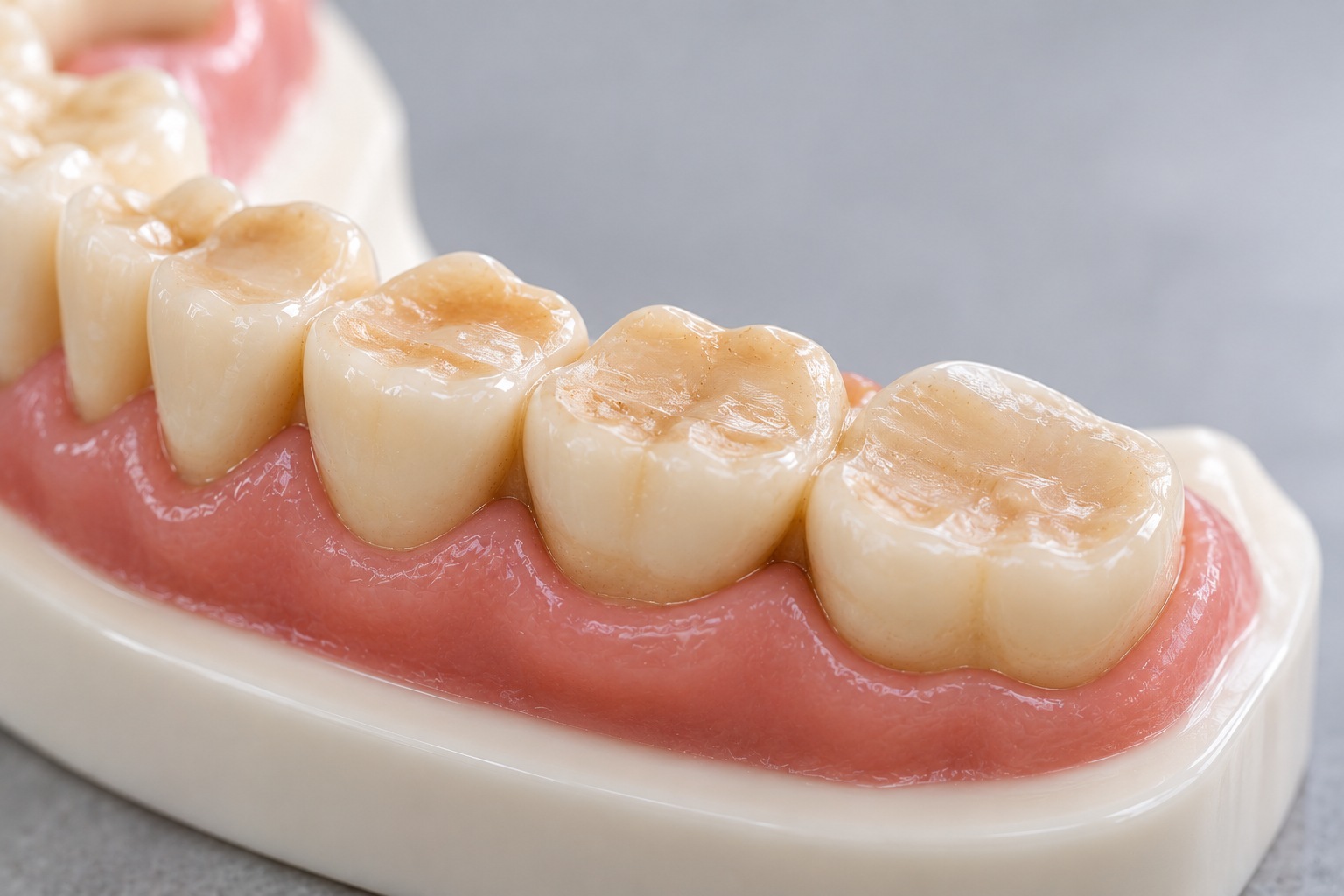
- Flattened, worn or chipped teeth.
- Cracked teeth or fillings.
- Teeth that are sensitive to cold.
- Sore or tired jaw muscles, especially on waking.
- Headaches, often around the temples, in the morning.
- Clicking or discomfort in the jaw joint.
- Grinding sounds at night, noticed by a partner.
Effects on the teeth and jaw
Repeated grinding and clenching over time can wear the teeth down, cause chips and cracks, damage fillings and crowns, and make teeth sensitive. Strain on the jaw muscles and joints can lead to pain and stiffness.
How bruxism is managed
Management depends on the type of bruxism and its likely causes. A custom-made splint (night guard) worn during sleep is commonly used to protect the teeth from wear and spread the biting forces. A splint protects the teeth but does not necessarily stop the grinding itself.
Where stress, a sleep disorder or a medicine may be contributing, this may be discussed with a doctor. If sleep apnoea is suspected, a sleep study prescribed by a sleep physician may be recommended. Worn or damaged teeth can be restored once the grinding is under control.
Common questions
How do I know if I grind my teeth at night?
Many people do not know. Common clues are a sore jaw or headache on waking, worn or chipped teeth, or a partner hearing grinding. A dentist can often see the signs of wear at a check-up.
Is a splint the same as a sports mouthguard?
No. A splint is a hard or dual-layer appliance designed for grinding and clenching during sleep. A sports mouthguard is softer and thicker, designed to absorb impacts during sport.
Is teeth grinding in children a concern?
Grinding is common in children and often stops as the adult teeth come through. It is worth mentioning at a check-up, particularly if a child snores or the teeth are wearing quickly.
Can bruxism cause jaw joint problems?
Grinding and clenching can contribute to pain in the jaw muscles and joints, although jaw joint problems can have several causes.
When to see a dentist
See a dentist if you notice worn or chipped teeth, a sore jaw or headaches on waking, or if someone hears you grinding at night. More information: splints and snoring devices.