General information only. This article explains dental topics in general terms and isn’t a substitute for personal advice. Everyone’s oral health and dental needs are different, so please see a dentist for advice that applies to you.
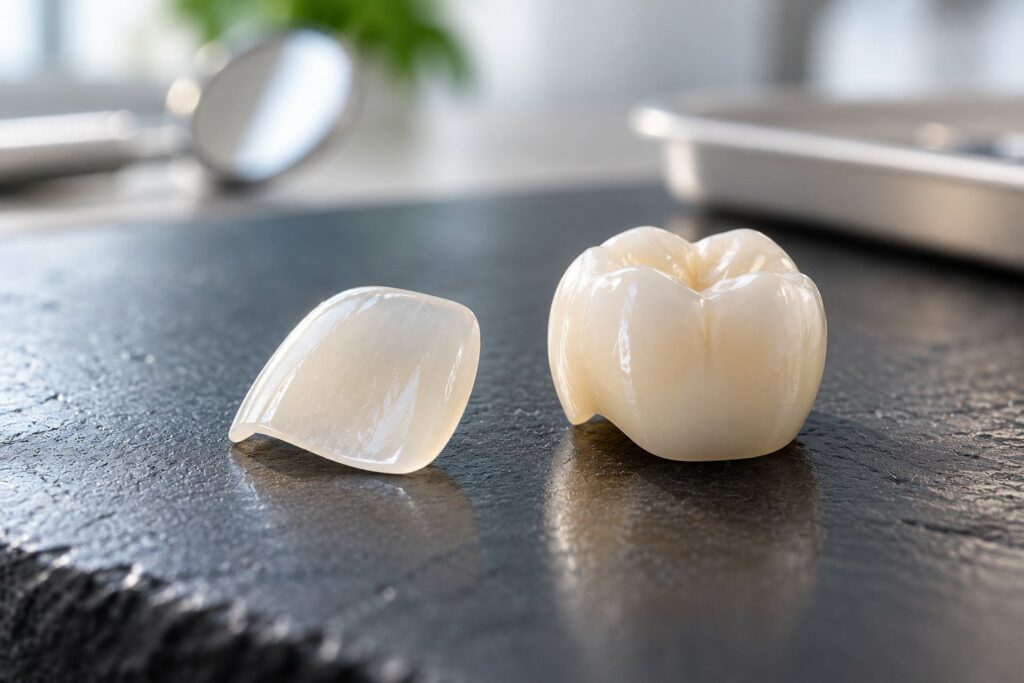
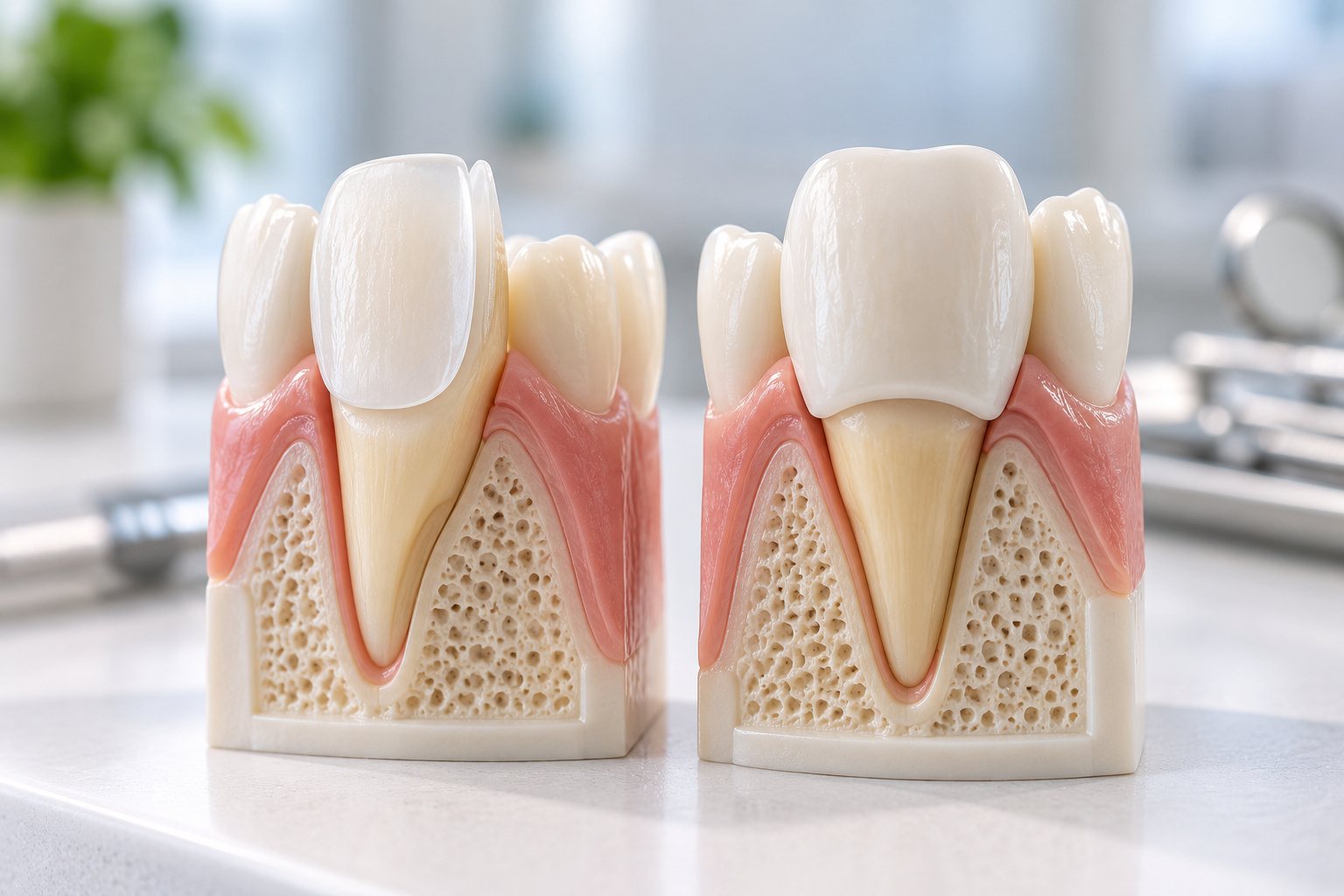
Veneers and crowns can both change how a tooth looks, but they do different jobs. A veneer is a thin shell bonded to the front of a tooth. A crown covers the whole visible part of the tooth. This article compares their purpose, durability, effect on the tooth and care.
Purpose
Veneers: mainly cosmetic
Veneers are mainly used on front teeth to change colour, shape or size, close small gaps, or cover chips and stains that do not respond to whitening. They suit teeth that are otherwise healthy and structurally sound. See dental veneers.
Crowns: restorative
Crowns are used to protect and strengthen teeth that are heavily filled, cracked, badly worn or have had root canal treatment, as well as to cover implants. They also improve appearance, but their main role is structural. See dental crowns.
The key difference
If a tooth is healthy and the concern is how it looks, a veneer may be considered. If a tooth is weakened or damaged, a crown is more often recommended.
Durability and lifespan
Both can last many years with good care. Porcelain veneers and crowns commonly last 10 years or more, and composite veneers usually need repair or replacement sooner. Because crowns cover the whole tooth and are often thicker, they are generally better at withstanding heavy biting forces. Grinding, biting hard objects and poor oral hygiene shorten the life of both.
Effect on the tooth
A porcelain veneer usually needs a thin layer of enamel removed from the front of the tooth, and some composite veneers need little or none. A crown requires more of the tooth to be shaped all round. Both are generally permanent decisions, because the tooth will need a covering from then on.
Maintenance and care
- Brush twice a day with fluoride toothpaste and clean between teeth daily.
- Avoid biting hard objects such as ice, pens and fingernails.
- Wear a night guard if you grind and a mouthguard for contact sports.
- Have regular check-ups so edges and gums can be checked.
- Veneers and crowns do not whiten, so any whitening is best done before they are made.
Making the decision
The right option depends on the condition of the tooth, your bite, grinding habits, appearance goals and budget. Other options, such as whitening, bonding or orthodontic treatment, may also be worth considering. A dentist can examine the tooth and explain the pros and cons of each option for you.
Common questions
What is the process for each?
Both usually involve an assessment, preparation of the tooth, a scan or impression, a temporary in some cases, and a fitting appointment. Composite veneers can often be done in one visit.