General information only. This article explains dental topics in general terms and isn’t a substitute for personal advice. Everyone’s oral health and dental needs are different, so please see a dentist for advice that applies to you.
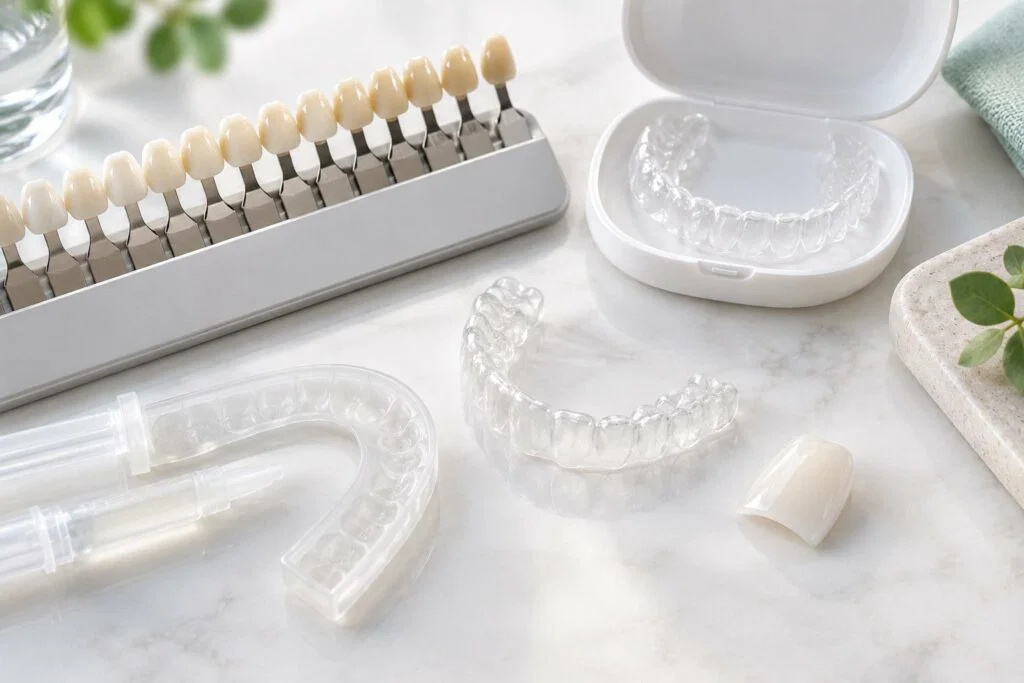
Cosmetic dentistry covers treatments that change how the teeth and gums look, such as their colour, shape, size, alignment and spacing. Several treatments may be combined in a plan sometimes called a smile makeover. This article outlines the main options, how planning works, what to consider and how to look after the results.
Cosmetic and restorative treatment
Restorative dentistry focuses on the health and function of the teeth; cosmetic treatment focuses on appearance. Many treatments do both. A crown can protect a cracked tooth and improve its look, and straightening crowded teeth can make them easier to clean. Any decay or gum disease should be treated before cosmetic work begins.
Common treatments
| Treatment | What it does | Main considerations |
|---|---|---|
| Teeth whitening | Lightens natural tooth colour | Does not change fillings, crowns or veneers; may cause temporary sensitivity |
| Composite bonding | Tooth-coloured resin repairs chips, small gaps or uneven edges | Usually one visit; can stain or chip over time |
| Veneers | Thin porcelain or composite shells cover the front of teeth | Porcelain usually needs some enamel removed, which cannot be reversed |
| Crowns | Cover and protect a weakened or badly shaped tooth | Needs more tooth preparation than a veneer |
| Orthodontics | Braces or clear aligners straighten teeth and correct the bite | Takes months; retainers needed afterwards |
| Implants, bridges and dentures | Replace missing teeth | Implants need surgery and healing time |
| Gum contouring | Reshapes the gum line, for example for a “gummy” smile | Minor surgery; not suitable in every case |
More detail is in our guides to teeth whitening, veneers and teeth straightening.
What a combined plan (smile makeover) involves
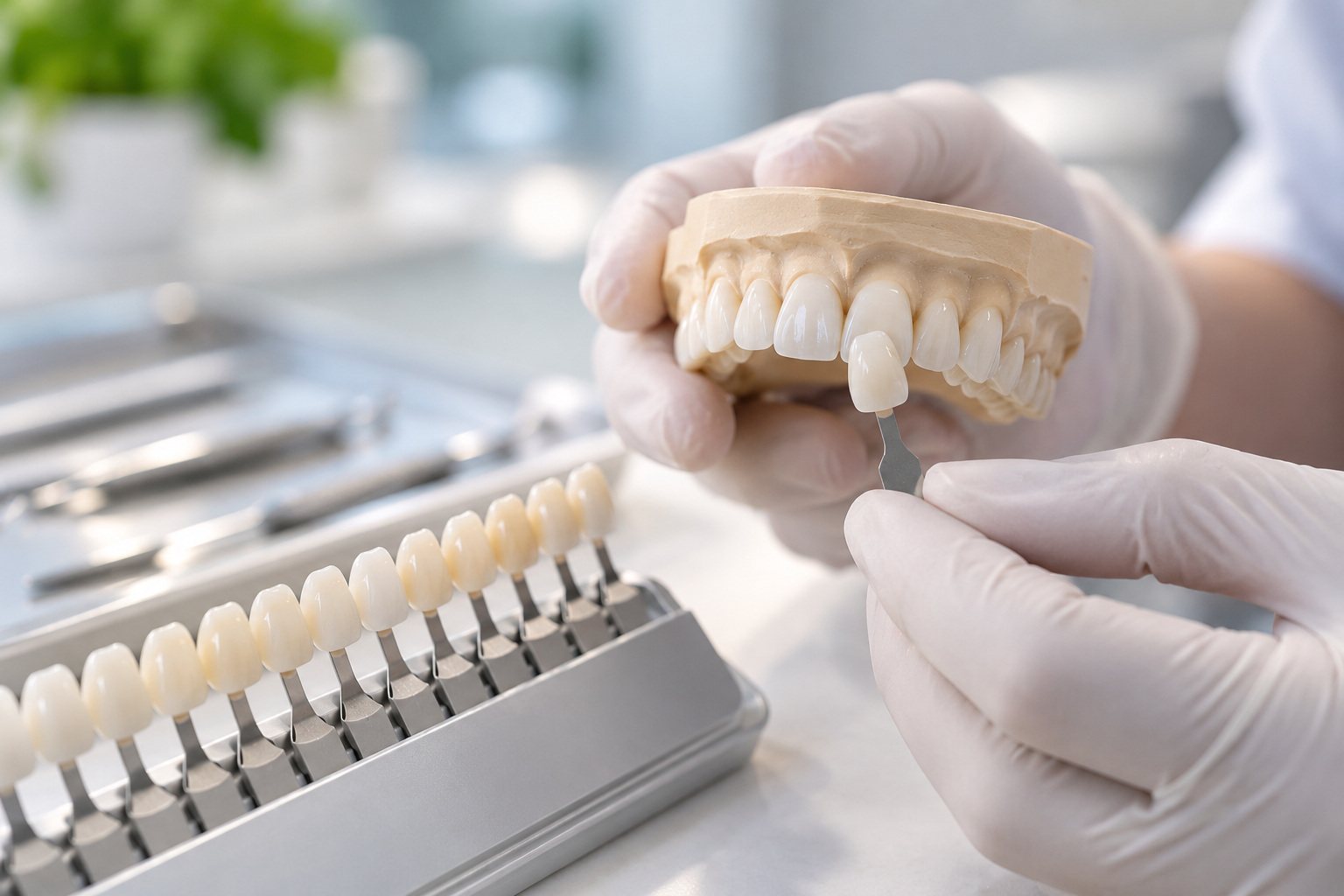
A smile makeover is not a single procedure. It is a plan that combines treatments to address several concerns, such as discolouration, gaps, worn or chipped teeth, crowding and missing teeth. The order matters: teeth are often straightened before veneers or crowns, and whitening is usually done before tooth-coloured fillings, veneers or crowns so they can be matched to the lighter shade.
Planning and consultation
- Discuss your goals. Think beforehand about what you would like to change. Photos of smiles you like can help explain your preferences.
- Examination. Teeth, gums and bite are checked, with X-rays if needed, and any existing dental work reviewed.
- Records. Photos, scans or models may be taken. Digital planning or a temporary mock-up can show the likely result before treatment starts.
- Treatment plan. The options, order, number of visits, timeframe, risks, maintenance and fees should be explained in writing.
Simple treatments such as whitening or bonding may take one or two visits. Plans including orthodontics or implants can take many months.
Benefits and realistic expectations
Many people feel more comfortable smiling and speaking after treatment, and some treatments improve chewing, cleaning or the protection of damaged teeth. Results depend on the starting point, the health of the teeth and gums, and the treatment chosen. Cosmetic treatment cannot make teeth perfect, and some treatments, such as porcelain veneers, permanently change the teeth.
Risks
- Tooth sensitivity, usually temporary, after whitening or tooth preparation.
- Irreversible removal of enamel for veneers and crowns.
- Chipping, staining or wear of bonding and veneers over time, needing repair or replacement.
- Gum irritation, and the usual risks of surgery for implants or gum contouring.
Recovery and aftercare
Most cosmetic treatments need little or no recovery time. Sensitivity after whitening usually settles within a few days. Surgical treatments such as implants or gum contouring need a few days of care and follow-up visits.
Looking after the results
- Brush twice a day with fluoride toothpaste and a soft brush, and clean between teeth daily.
- Limit coffee, tea, red wine and smoking, which stain teeth and bonding.
- Avoid biting hard objects such as ice, pens or fingernails.
- Wear a mouthguard for contact sport, and a night guard if you grind your teeth.
- Keep up regular check-ups and professional cleans so dental work can be checked.
Whitening usually needs touching up over time. Bonding, veneers and crowns may last many years but will eventually need replacing.
Choosing a provider
In Australia, “cosmetic dentistry” is not a recognised specialty. Check that the dentist is registered on the AHPRA public register, ask how often they provide the treatment you are considering, and make sure the options, risks, maintenance and fees have been explained before you agree to treatment.
Common questions
Will my health fund cover cosmetic treatment?
Cover varies between funds and policies. Treatments with a health purpose, such as crowns, may attract a benefit, while purely cosmetic treatment such as whitening often does not. Check with your fund using the item numbers on your treatment plan.
Who is suitable?
Most adults with healthy teeth and gums who are unhappy with how their teeth look. Gum disease and decay are treated first.