General information only. This article explains dental topics in general terms and isn’t a substitute for personal advice. Everyone’s oral health and dental needs are different, so please see a dentist for advice that applies to you.
Oral cancer is cancer that starts in the mouth, including the lips, tongue, gums, cheeks, and the floor and roof of the mouth. Cancers further back, in the throat (oropharynx), are closely related. This article covers risk factors, warning signs, diagnosis, treatment and how to lower your risk.
Most mouth cancers are squamous cell carcinomas, which start in the thin cells lining the mouth. Oral cancer is more common in people over 40, and in men, but can affect anyone.
Risk factors
- Tobacco in any form, including cigarettes, pipes, cigars and chewing tobacco.
- Alcohol, especially heavy drinking. The risk is much higher when drinking is combined with smoking.
- Human papillomavirus (HPV), mainly type 16, which is linked to cancers of the throat, tonsils and back of the tongue.
- Sun exposure, which increases the risk of lip cancer, particularly for people who work outdoors.
- Betel nut (areca nut) chewing, common in some communities.
- A weakened immune system, and a diet low in fruit and vegetables.
Warning signs
- A mouth ulcer or sore that has not healed within two to three weeks.
- A white or red patch inside the mouth (leukoplakia or erythroplakia). These are not always cancer but should be checked.
- A lump or thickening in the mouth, lip or neck.
- Pain, numbness or bleeding in the mouth without an obvious cause.
- Difficulty chewing, swallowing or moving the tongue or jaw.
- A persistent sore throat, hoarse voice or ear pain on one side.
- Loose teeth, or dentures that suddenly no longer fit, without a dental reason.
Many of these signs have other, harmless causes, but any that last more than two to three weeks should be checked by a dentist or doctor.

Checks and diagnosis
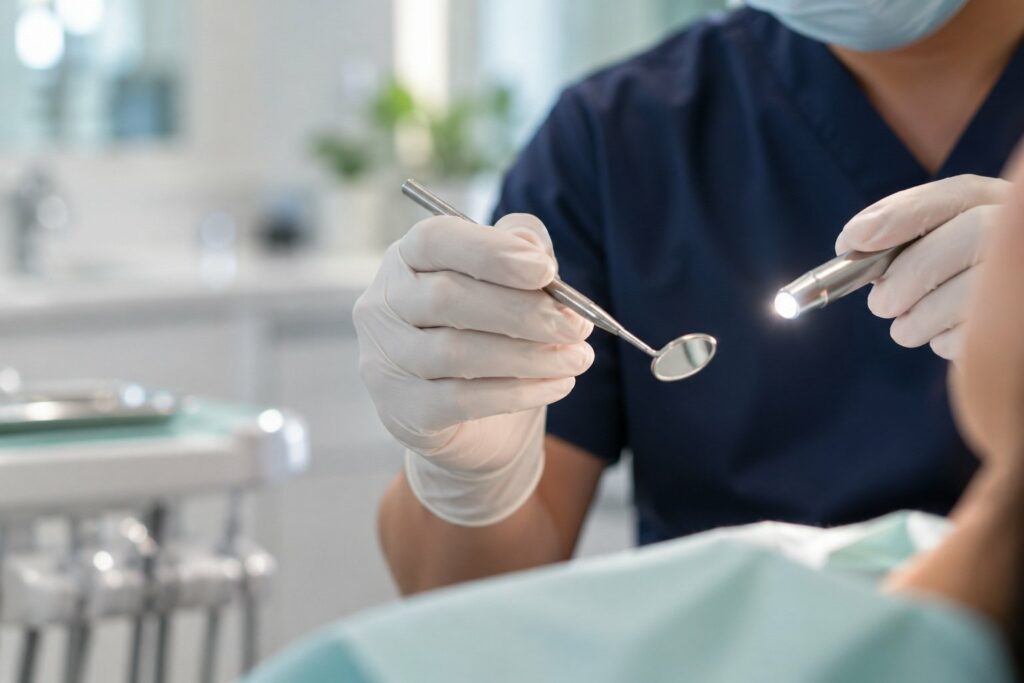
Dentists look at the whole mouth, including the tongue, cheeks, floor of the mouth and palate, at routine check-ups. If something looks unusual, it may be reviewed again in a couple of weeks or referred. Diagnosis is made by a biopsy, where a small piece of tissue is removed and examined under a microscope. Scans such as CT, MRI or PET may be used to see whether cancer has spread.
Treatment
Treatment depends on the size and location of the cancer and the person’s general health, and is planned by a team of specialists. Options include surgery to remove the cancer, radiotherapy, chemotherapy or other medicines, often in combination. Small cancers found early can often be treated with less extensive surgery and have a better outlook.
Radiotherapy to the head and neck can affect the teeth, saliva and jawbone, so a dental check before treatment and ongoing dental care afterwards are important.
Lowering your risk
- Do not smoke or use any tobacco; Quitline (13 78 48) offers free support.
- Limit alcohol. Australian guidelines recommend no more than 10 standard drinks a week and no more than 4 on any one day.
- HPV vaccination is offered free to young people through the school program in Australia.
- Protect your lips from the sun with an SPF lip balm and a broad-brimmed hat.
- Eat plenty of fruit and vegetables.
- Have regular dental check-ups, and look in your mouth now and then for changes.
Support
If you or someone close to you is diagnosed with oral cancer, Cancer Council (13 11 20) provides information, support services and links to support groups. Dietitians, speech pathologists and psychologists are often part of the treatment team, as treatment can affect eating, speech and wellbeing.
Common questions
Can oral cancer be prevented?
Not every case can be prevented, but avoiding tobacco, limiting alcohol, protecting lips from the sun and HPV vaccination lower the risk considerably.
Does a dental check-up include an oral cancer check?
Looking at the soft tissues of the mouth is a routine part of a dental examination. Mention any sore, patch or lump you have noticed.