General information only. This article explains dental topics in general terms and isn’t a substitute for personal advice. Everyone’s oral health and dental needs are different, so please see a dentist for advice that applies to you.
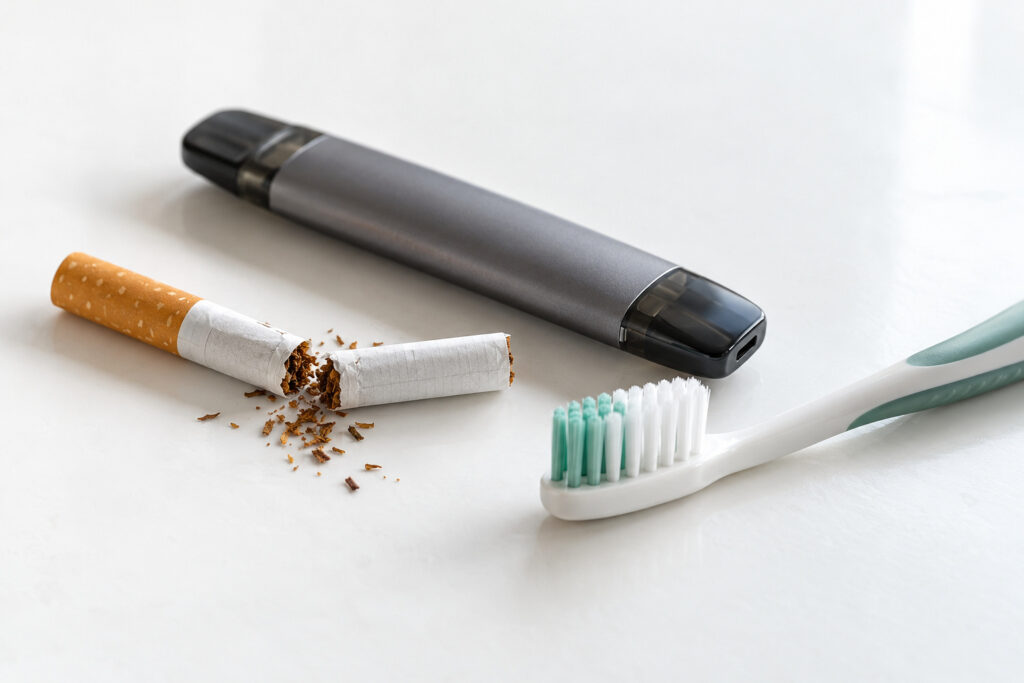
Smoking affects almost every part of the mouth, from the colour of the teeth to the health of the gums and the way the mouth heals. Vaping is newer, and its long-term effects on oral health are still being studied. This article explains what is known about how both can affect the mouth.
Staining and bad breath
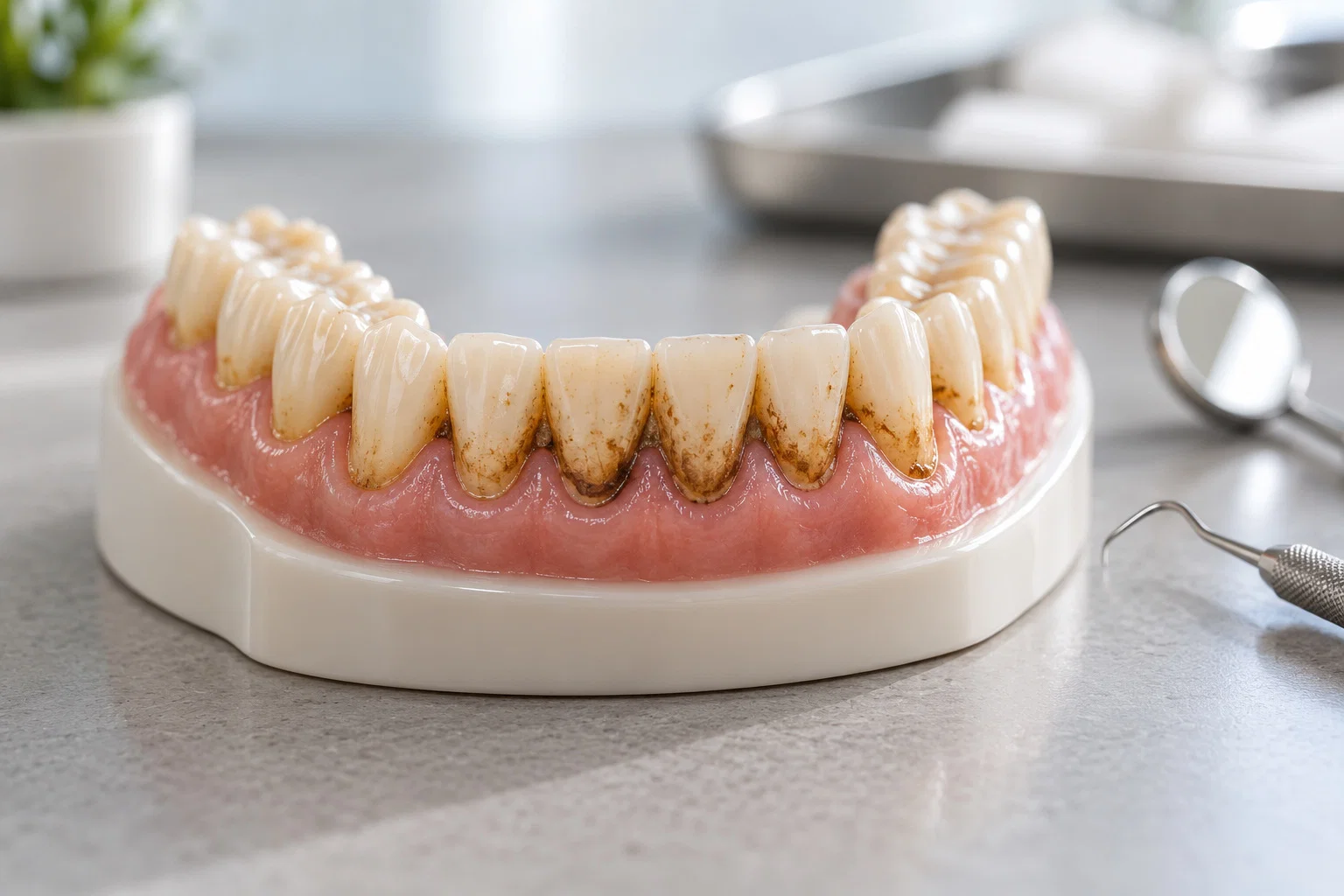
Tar and nicotine in tobacco stain the teeth yellow or brown, and stains also build up on fillings, crowns and dentures. Smoking leaves a lingering odour on the breath, dries the mouth and dulls the senses of taste and smell.
Gum disease
Smoking is one of the main risk factors for gum disease. People who smoke are more likely to develop periodontitis, the advanced stage of gum disease in which the bone supporting the teeth is gradually lost, and it tends to be more severe.
Smoking reduces blood flow to the gums. As a result, the gums of people who smoke often bleed less than expected, even when gum disease is present. This can hide one of the early warning signs, so gum disease may not be noticed until it is more advanced.
Healing and dental treatment
Because it affects blood flow and the body’s response to infection, smoking can slow healing in the mouth. After a tooth is removed, smoking increases the risk of a dry socket, a painful condition in which the blood clot in the socket is lost. Smoking is also a recognised risk factor for complications with dental implants and gum treatment, and it is considered when these treatments are planned.
Oral cancer
Tobacco use is a major risk factor for cancers of the mouth, lips, tongue and throat, and the risk is higher again when smoking is combined with alcohol. Regular check-ups include an examination of the soft tissues of the mouth. A sore, ulcer, lump or red or white patch that does not heal within two weeks should be checked.
What about vaping?
Vapes heat a liquid that usually contains nicotine, flavourings and other chemicals. Because vaping has only been widespread for a relatively short time, there is limited long-term research on its effects on the mouth. Reported effects include a dry mouth, irritation of the gums and mouth, and staining. Vapes are not a risk-free alternative to smoking.
After quitting
Stopping smoking benefits the whole body, including the mouth. Over time, the senses of taste and smell often improve, and the risk of gum disease and oral cancer falls compared with continuing to smoke. Support to quit is available from your doctor or pharmacist, and from Quitline on 13 7848.
Common questions
Can a professional clean remove smoking stains?
A professional clean removes most surface stains and tartar from the teeth. Stains tend to return while smoking continues.
Why don’t my gums bleed if I smoke?
Smoking reduces blood flow to the gums, which can mask bleeding. Gums that do not bleed are not necessarily healthy, which is why regular gum checks matter for people who smoke.
Can I have dental implants if I smoke?
Smoking does not always rule out implants, but it increases the risk of healing problems and of gum and bone problems around the implant. It is discussed during the assessment. More information: dental implants.
Are nicotine pouches safer for the mouth?
Nicotine pouches avoid smoke, but they still deliver nicotine and sit against the gums. Their long-term effects on the mouth are not yet well understood.
When to see a dentist
See a dentist if you notice bleeding or receding gums, loose teeth, a persistent bad taste, or any sore, lump or patch in the mouth that has not healed within two weeks. More information: gum disease treatment.