General information only. This article explains dental topics in general terms and isn’t a substitute for personal advice. Everyone’s oral health and dental needs are different, so please see a dentist for advice that applies to you.

Diabetes affects many parts of the body, and the mouth is one of them. People with diabetes, particularly when blood glucose levels are not well controlled, are more likely to develop gum disease and some other mouth problems. Good oral care and regular dental visits are an important part of looking after your health with diabetes.
How diabetes affects the mouth
High blood glucose levels can reduce the body’s ability to fight infection and slow healing. They can also change the amount and make-up of saliva. As a result, the gums, teeth and soft tissues of the mouth are more vulnerable.
The link with gum disease
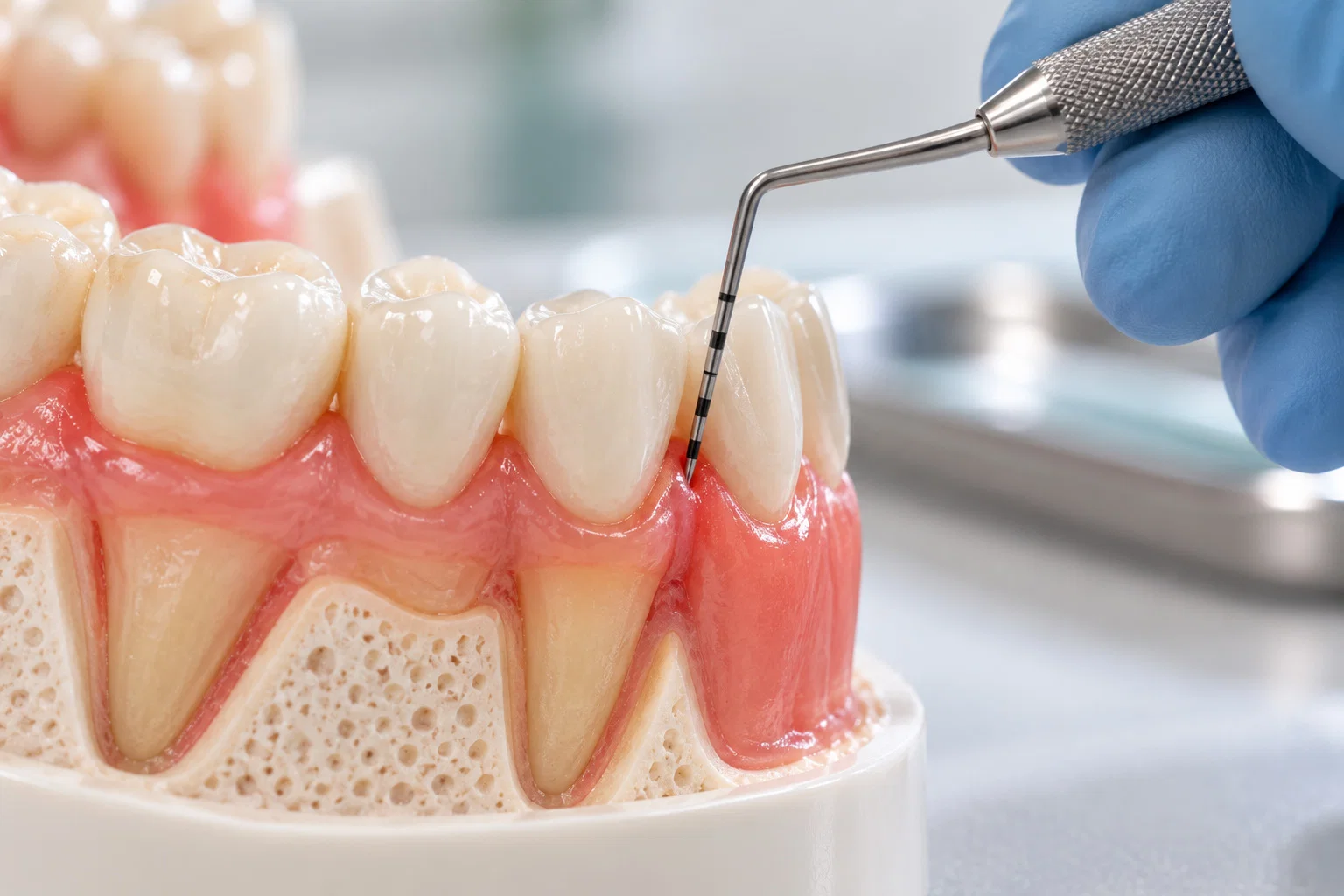
People with diabetes have a higher risk of periodontitis, the advanced stage of gum disease in which the supporting bone is gradually lost, and it can progress more quickly.
Gum disease is a long-term infection that causes inflammation, and this is one reason why it is regarded as part of overall health in people with diabetes.
Signs of gum disease include bleeding when brushing, red or swollen gums, bad breath, gums pulling back from the teeth, and teeth that feel loose or have moved. In its early stages it is often painless.
Other mouth problems
- Dry mouth, which increases the risk of decay and makes the mouth uncomfortable.
- Tooth decay, particularly when the mouth is dry or sugary drinks are used to treat low blood glucose.
- Fungal infections such as oral thrush, especially under dentures.
- Slow healing after extractions, gum treatment or other oral surgery.
- Burning mouth or changes in taste in some people.
Factors that affect the risk
The risk of gum disease and other mouth problems is generally higher when blood glucose levels are not well controlled. Smoking adds to the risk of gum disease. Plaque control at home and regular dental check-ups allow gum problems to be found early.
Dental visits with diabetes
Your medical history, including how your diabetes is managed and the medicines you take, is reviewed at dental appointments. If surgery such as an extraction or implant is being considered, your general health and blood glucose control are taken into account in planning.
Common questions
Does diabetes cause tooth loss?
Diabetes increases the risk of gum disease, and advanced gum disease can lead to teeth becoming loose and being lost.
Can I have dental implants if I have diabetes?
Many people with well-controlled diabetes can have implants. Poorly controlled diabetes increases the risk of healing problems and implant failure, so blood glucose control is assessed before treatment. More information: dental implants.
Why do my gums bleed?
Bleeding gums are usually a sign of gum inflammation caused by plaque. With diabetes, the gums can react more strongly, so bleeding is worth having checked.
How often should I see a dentist?
This depends on the health of your gums. People with diabetes and gum disease often benefit from more frequent maintenance visits, usually every three to six months.
When to see a dentist
See a dentist if your gums bleed, are swollen or have pulled back, if your teeth feel loose, or if a sore in the mouth is slow to heal. More information: gum disease treatment and dry mouth.