General information only. This article explains dental topics in general terms and isn’t a substitute for personal advice. Everyone’s oral health and dental needs are different, so please see a dentist for advice that applies to you.
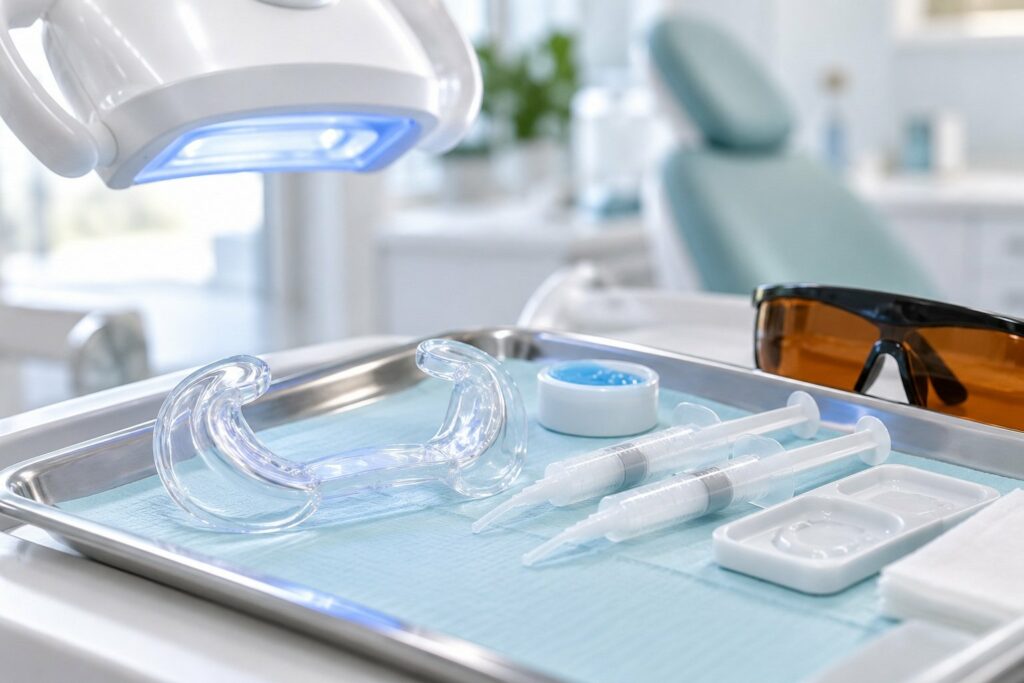
Teeth whitening can be done in the dental chair, at home with trays supplied by a dentist, or with over-the-counter products. This article explains why teeth discolour, how each whitening option works, what to expect, the risks, home remedies to be cautious about, and how to keep teeth lighter afterwards.
Why teeth discolour
Surface (extrinsic) stains
These come from coffee, tea, red wine, dark berries and tobacco, and build up more quickly when plaque is not removed. They usually respond well to a professional clean and to whitening.
Internal (intrinsic) discolouration
This comes from within the tooth. Causes include ageing, as enamel thins and the darker dentine shows through; some medicines taken in childhood, such as tetracycline antibiotics; too much fluoride while teeth are forming (fluorosis); injury to a tooth; and genetics. Intrinsic discolouration often responds less well to whitening.
How whitening works
Whitening products use hydrogen peroxide or carbamide peroxide, which breaks down into hydrogen peroxide. The peroxide passes into the enamel and dentine and breaks down the molecules that cause staining. The result depends on the strength of the gel, how long it is applied, and the starting colour and type of staining.
In-chair whitening
The teeth and gums are checked first, and a clean may be done to remove plaque and tartar. The gums and lips are protected with a barrier, then a higher-strength peroxide gel is applied for a set time. Some systems use a light or laser with the gel, although evidence that the light improves the result is mixed. A visible change is often seen after one appointment of about an hour, and further sessions may be needed.
Take-home whitening from a dentist
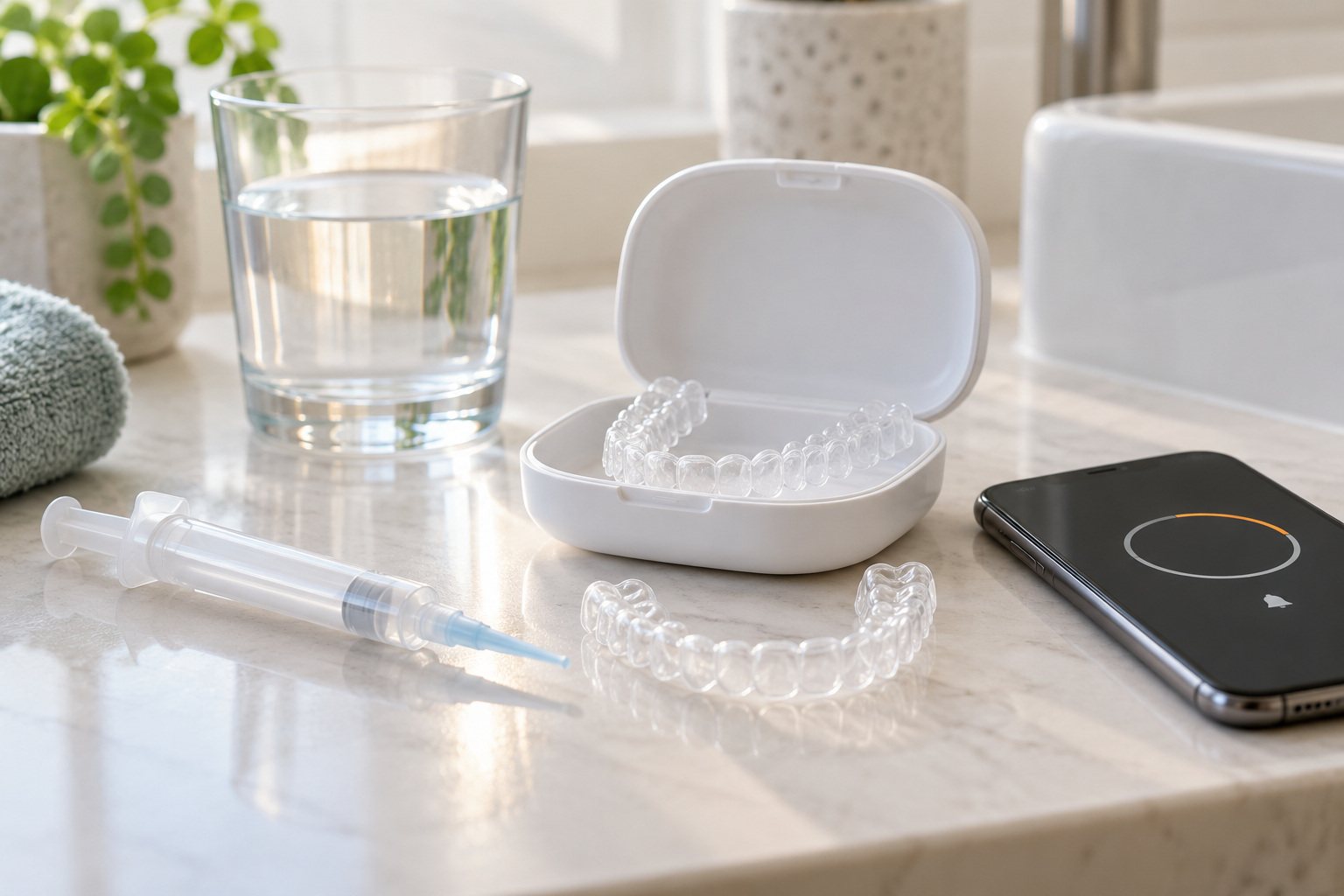
Custom trays are made from a scan or impression of the teeth. A lower-strength gel is placed in the trays and worn for a set time each day or overnight, usually for one to a few weeks. Whitening is more gradual, and well-fitting trays keep the gel off the gums. Many people combine an in-chair session with take-home trays for top-ups.
Over-the-counter products
Whitening strips
Thin plastic strips coated with a peroxide gel, usually worn for 30 minutes to an hour a day over days or weeks. They are easy to use, but results vary and they do not fit as closely as custom trays. Some people notice sensitivity; stop if it becomes uncomfortable.
Gels and generic trays
Lower-strength gels in one-size trays can work slowly, but loose trays may let gel touch the gums and whiten unevenly.
Whitening toothpaste and mouthwash
These mainly remove or prevent surface stains using mild abrasives or chemical agents. They are useful for maintenance but do not produce a large change in colour, and very abrasive pastes used heavily can wear enamel.
Home remedies to be cautious about
- Baking soda is mildly abrasive and can remove some surface staining, but frequent heavy use can wear enamel.
- Activated charcoal is abrasive and there is little evidence that it whitens teeth; it is not recommended.
- Lemon juice and apple cider vinegar are acidic and erode enamel; they should not be used on teeth.
- Oil pulling has no good evidence of whitening teeth.
- Diluted hydrogen peroxide at home can irritate the gums if used incorrectly.
Comparing the options
| Option | Strength | Speed | Supervision |
|---|---|---|---|
| In-chair | Highest | Fastest, often one visit | Dentist |
| Take-home trays from a dentist | Moderate | Gradual, over weeks | Dentist |
| Strips and OTC gels | Lower | Slow, variable | Self |
| Whitening toothpaste | Surface stains only | Gradual | Self |
Who whitening suits
Whitening suits people with healthy teeth and gums whose discolouration is mainly surface staining or due to ageing. It is usually delayed or avoided when:
- there is untreated decay or gum disease;
- the person is pregnant or breastfeeding;
- teeth are very sensitive, or there is an allergy to peroxide;
- front teeth have fillings, crowns or veneers, which will not change colour.
Risks and side effects
- Sensitivity to hot and cold during or after whitening, usually settling within a few days.
- Gum irritation if gel touches the gums.
- Uneven results, particularly with intrinsic stains or loose trays.
- Mismatch with fillings, crowns or veneers, which do not lighten.
- Enamel wear from overuse or abrasive and acidic home remedies.
Follow the instructions given and stop if discomfort is significant. See the risks of teeth whitening for more detail.
Keeping teeth lighter for longer
- Brush twice a day with fluoride toothpaste and a soft brush, and floss daily.
- Cut down on coffee, tea, red wine, dark berries and dark sauces, or rinse with water afterwards.
- Avoid smoking.
- Keep up regular check-ups and professional cleans to remove new surface stains.
- Touch-ups may be needed over time; results often last months to a few years.
Choosing a provider
Check that the dentist is registered on the AHPRA public register, and that the options, likely result, side effects and the effect on existing dental work have been explained.